

Table of contents
- Identify the transmission before comparing DCT fluids
- Understand what wet and dry clutch design changes
- Map every lubricant circuit before accepting a cross-reference
- Build a controlled DCT compatibility matrix
- Keep the FLYSAK wet and dry product routes separate
- Request documents that identify the same saleable product
- Approve labels and packaging around application control
- Send an RFQ that exposes compatibility gaps early
- Frequently asked questions
- Sources
Identify the transmission before comparing DCT fluids
Start with the vehicle and transmission, not the supplier catalogue. Record the market, model year, powertrain, transmission code and fluid requirement from current owner or service information. One model can use different transmissions across engines, years and regions.
Wet or dry is only one field. Hyundai and Kia information documents both architectures in passenger vehicles, but each page still points owners to vehicle-specific guidance. Ask the supplier to return unresolved rows instead of extending a claim to every seven-speed DCT.
| Field | Evidence to collect | Purchasing use |
|---|---|---|
| Vehicle | Market, make, model, year and powertrain | Separate regional and model-year variants |
| Transmission | Type and exact transmission code | Avoid matching by vehicle name alone |
| Clutch design | Wet or dry designation from a reliable source | Identify the architecture without inferring the fluid |
| Fluid circuit | Clutch, gearbox and mechatronic circuit map | Confirm whether one or several fluids are required |
| Specified fluid | Current OEM number, specification and service source | Create the non-negotiable selection reference |
Understand what wet and dry clutch design changes
In a wet DCT, the clutch pack operates in fluid. Depending on the design, that lubricant may also serve gears, bearings, synchronisers or hydraulic functions. The wet label alone does not identify the required fluid.
In a dry DCT, the clutch friction surfaces are not immersed in gearbox oil. The gears, bearings or a separate control circuit can still require lubricant. Schaeffler documents different wet and dry arrangements, so buyers must confirm which parts share fluid and what the exact transmission code requires.
| Review point | Wet-clutch DCT | Dry-clutch DCT |
|---|---|---|
| Clutch environment | Clutch pack operates in fluid | Clutch friction surfaces are not immersed in gearbox oil |
| Possible fluid duties | May include clutch friction, gear, bearing and hydraulic functions | May cover gears and bearings; control fluid may be separate |
| Main buyer risk | Assuming all wet DCTs use one common DCTF | Assuming a dry clutch means the transmission needs no fluid |
| Selection control | Confirm code, circuit layout and required fluid | Confirm code, gearbox lubricant and any separate circuit |
Map every lubricant circuit before accepting a cross-reference
A DCT can use one shared sump or separate lubricant sections. ZF TE-ML 11, for example, distinguishes clutch and transmission sections for specified DCT groups. It is not a universal map, but it shows why a single line marked DCT oil can be incomplete.
Create one row per fill point: function, specified fluid, fill-quantity source, service method and evidence date. Keep any separate mechatronic fluid under its own product, label and warehouse code so workshops can identify the correct bottle.
Build a controlled DCT compatibility matrix
Treat a supplier cross-reference as a proposal, not final artwork. Each row should connect one transmission group to its specified fluid, supplier product, source, source date, permitted wording and exclusions. OEM approvals, official listings, test-based claims and recommendations are different evidence levels.
Hyundai directs owners to the vehicle's recommended-lubricants section, while Kia publishes model-specific classifications and named products. Retain the exact source behind each application instead of reducing several requirements to a generic wet DCT or dry DCT claim.
| Matrix field | Required evidence | Release rule |
|---|---|---|
| Transmission group | Vehicle list and exact transmission code | Exclude uncertain variants |
| Circuit and required fluid | Current owner, service or transmission-maker source | Do not infer from clutch type |
| Supplier product | Controlled product and formulation code | One identity across documents and sample |
| Claim basis | Approval, listing, test or written recommendation | Use wording that matches the evidence level |
| Review status | Source date, reviewer and exclusions | Recheck before artwork or range expansion |
Keep the FLYSAK wet and dry product routes separate
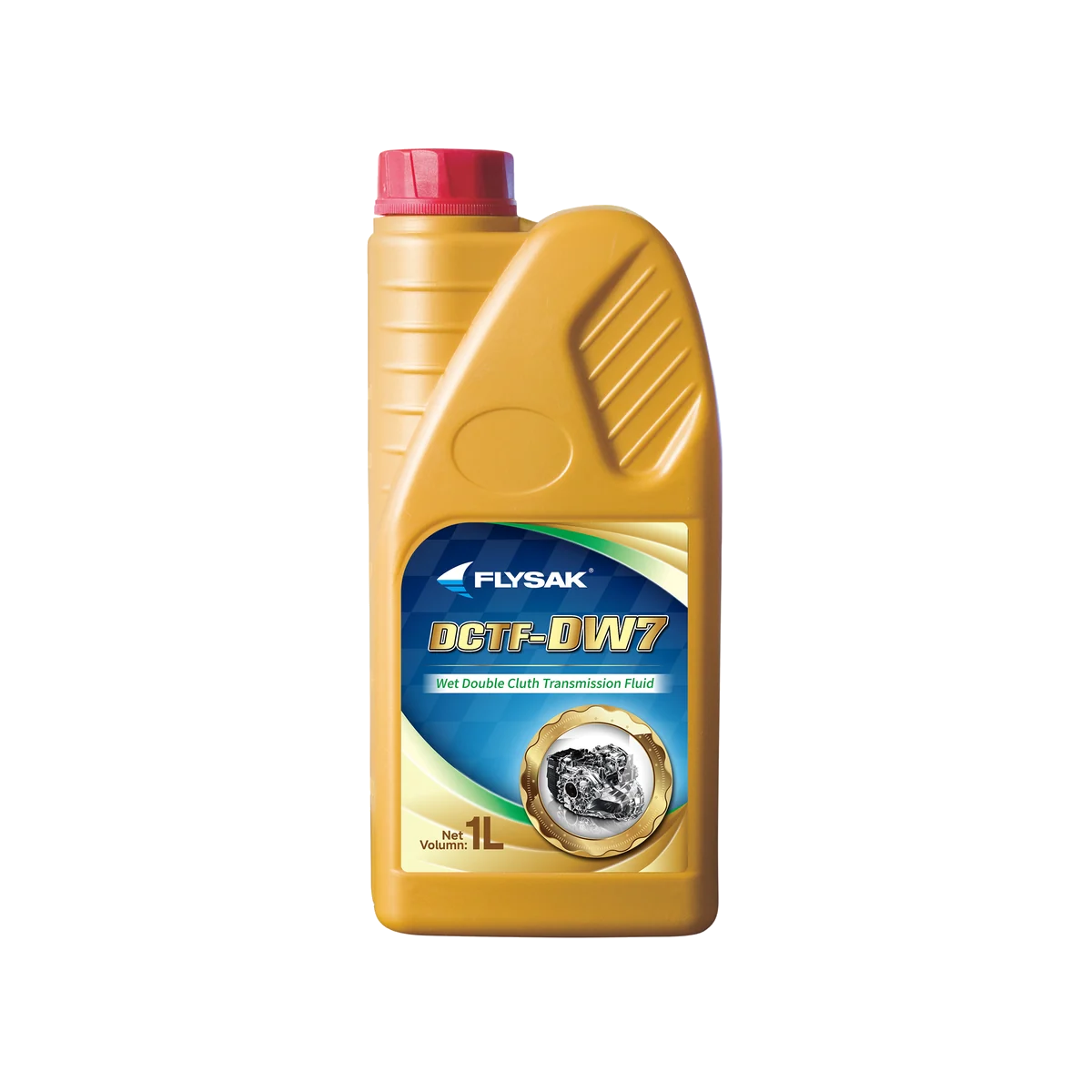
FLYSAK separates two one-litre routes. DCTF-DV7 is positioned for dry dual-clutch gearbox lubrication circuits; DCTF-DW7 is for wet DCTs with shared gear and clutch lubrication. These are catalogue routes, not universal grades or blanket approvals.
Use the pages to create a shortlist, then request the current TDS, SDS and written compatibility statement for the exact transmission. Never transfer an OEM reference between the two products; release label wording only from the controlled matrix.
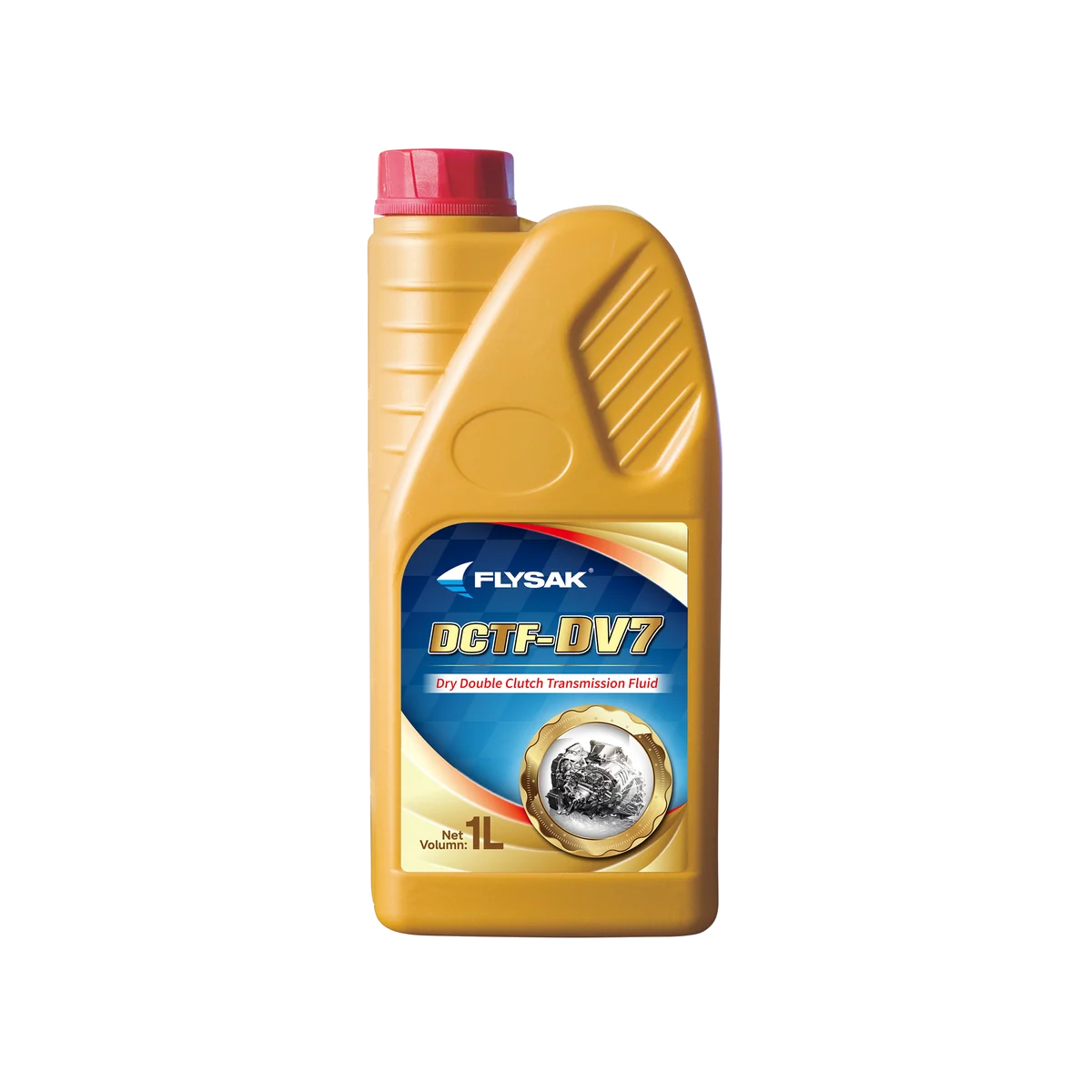
- Review FLYSAK DCTF-DV7 — See the current dry-clutch gearbox-lubrication route and request updated documents.
- Review FLYSAK DCTF-DW7 — Compare the current wet-clutch DCT route before confirming an application.
- Compare the FLYSAK transmission-fluid catalogue — Keep DCTF, conventional ATF, CVT fluid and MTF product families separate.
Request documents that identify the same saleable product
The product name, formulation code and application should agree across the quotation, TDS, SDS, compatibility statement, sample COA, label and purchase order. Evidence for another formulation does not support the proposed bottle.
Use the TDS for intended use and representative properties, the SDS for classification and handling, and the COA for agreed batch checks. Ask which formulation, additive, base-oil or test-method changes require notice, new evidence, another sample or buyer approval.
- Read the CVT fluid compatibility guide — Apply the same transmission-code discipline while keeping CVT and DCT products separate.
Approve labels and packaging around application control
Use distinct product codes and clear front-panel identifiers for wet and dry routes. Store controlled application wording, exclusions, fill-point warnings and document revision in the artwork record; colour alone is not a reliable control.
Approve a production-representative bottle and carton, checking the cap, seal, label fit, barcode, batch-code position, carton marks and destination language. Receiving inspection should match product code, artwork revision, batch code and shipping documents before release.
- Review FLYSAK private-label support — Connect product selection, documents, samples and packaging in one approval route.
Send an RFQ that exposes compatibility gaps early
Include destination markets, vehicle groups, transmission codes, clutch design, circuit map, fluid identifiers, pack size, label languages and SKU mix. Mark applications linked to service questions or returns.
Ask for a product map, evidence status, exclusions, TDS, SDS, sample plan, batch controls, packaging proposal and change-control terms. FLYSAK can review this brief against its current catalogue, but each compatibility statement must still be checked before ordering or printing artwork.
- Read the automatic transmission fluid supplier guide — Use the broader supplier-evaluation checklist without mixing ATF, CVT and DCT routes.
- Send your DCT fluid sourcing brief — Share transmission codes, required fluids, pack sizes and target markets for review.
Frequently asked questions
Is wet DCT fluid the same as dry DCT fluid?
No universal equivalence exists. Wet and dry identify clutch architecture, while the required service fluid depends on the exact transmission code and lubricant circuit. Confirm the manufacturer fluid identifier and current compatibility evidence before selecting a product.
Does a dry dual-clutch transmission need fluid?
Often, yes. Dry describes the clutch friction surfaces, not every part of the transmission. The gears, bearings or a separate hydraulic or mechatronic circuit may still require a specified lubricant. Check the exact transmission service information.
Can conventional ATF be used in a DCT?
Only if the vehicle or transmission manufacturer explicitly specifies or permits that exact fluid. Conventional ATF, CVT fluid, wet DCT fluid, dry DCT gearbox fluid and MTF are separate selection routes unless current manufacturer information says otherwise.
Can a wet-clutch DCT use a dry-clutch DCT fluid?
Do not assume so. A wet-clutch circuit may require controlled clutch-friction behaviour and other functions that differ from a dry-clutch gearbox circuit. Match the exact required fluid and supplier evidence, not only the DCT label.
How can an importer identify whether a DCT is wet or dry?
Use the vehicle manufacturer's owner or service information, transmission code and component-maker documentation. Do not infer the design from the number of gears, vehicle badge or a generic DSG or DCT description.
What documents should a DCT fluid importer request?
Request the current TDS and SDS, a transmission-code compatibility matrix, claim or approval evidence, written product specification, sample COA, production-representative fluid and pack samples, artwork proof, batch-code plan and change-control procedure.
What is the MOQ for private label DCT fluid?
There is no responsible universal figure. The applicable quantity depends on the exact formulation, one-litre pack components, printed-label and carton runs, artwork versions, filling plan and SKU mix. Request a written quotation for the confirmed wet and dry product configuration.
Sources
Technical and regulatory references reviewed for this article:
- Hyundai Owner's Manual - Dry-type Dual Clutch Transmission — Checked for Hyundai's dry-type DCT description.
- Kia 2026 Owner's Manual - Wet-type Dual Clutch Transmission — Checked for Kia's wet-type DCT description.
- Hyundai Owner's Manual - Dual Clutch Transmission Fluid — Checked for vehicle-specific DCT-fluid selection guidance.
- Kia Owner's Manual - Recommended Lubricants and Capacities — Checked for model-specific fluid and capacity data.
- ZF TE-ML 11 List of Lubricants — Checked for DCT service-fill listings and separate lubricant sections.
- Schaeffler - Wet and Dry Double Clutches — Checked for wet and dry double-clutch system design.