

Table of contents
- Start by separating the COA from the rest of the technical file
- Confirm product and batch identity before reading the numbers
- Read every result together with its method, unit and limit
- Use written acceptance limits instead of judging proximity to a typical value
- Define a risk-based testing and verification plan
- Connect batch release to packaging and shipping control
- Send an RFQ that makes the COA reviewable
- Frequently asked questions
- Sources
Start by separating the COA from the rest of the technical file
Importers often receive a TDS, SDS and COA together, but the three documents answer different questions. A TDS normally describes representative or typical product properties and performance positioning. An SDS supports hazard communication, handling and emergency information. A written finished-product specification defines the tests and acceptance limits used to decide whether a batch is conforming. The COA records results for an identified batch against that control system.
Licensing and approval evidence sits outside this document set. An API directory record, licence schedule or manufacturer approval cannot be replaced by a viscosity result on a COA. In the same way, a current licence does not prove that the specific shipment passed the supplier's batch-release checks. Each record should be reviewed for its own purpose and connected to the same product identity.
Ask the supplier to state whether a number is a typical value, a purchase specification limit or an individual batch result. These are not interchangeable. A result can differ from the TDS typical and still conform to the agreed range, while a certificate that shows only typical values may not report any actual batch testing at all.
| Document | Primary purpose | Buyer check | It does not prove by itself |
|---|---|---|---|
| TDS | Representative properties and product positioning | Product code, revision date and claim wording | Release of the shipped batch |
| SDS | Hazard communication and handling information | Exact product, language, jurisdiction and revision | Vehicle compatibility or batch conformance |
| Finished-product specification | Agreed tests, methods, units and acceptance limits | Approved revision and change control | The actual result for a specific batch |
| COA | Results and release status for an identified batch | Identity, methods, units, limits, results and authorisation | Every performance claim, API licence or OEM approval |
| Licence or approval evidence | Third-party permission or recognised product status | Exact marketer, brand, product, grade and current scope | Routine batch quality or packaging traceability |
- Verify an API engine-oil licence — Check licence scope separately from batch-release evidence.
- Compare API SQ and API SP buying controls — Connect service category, viscosity, evidence and artwork decisions.
Confirm product and batch identity before reading the numbers
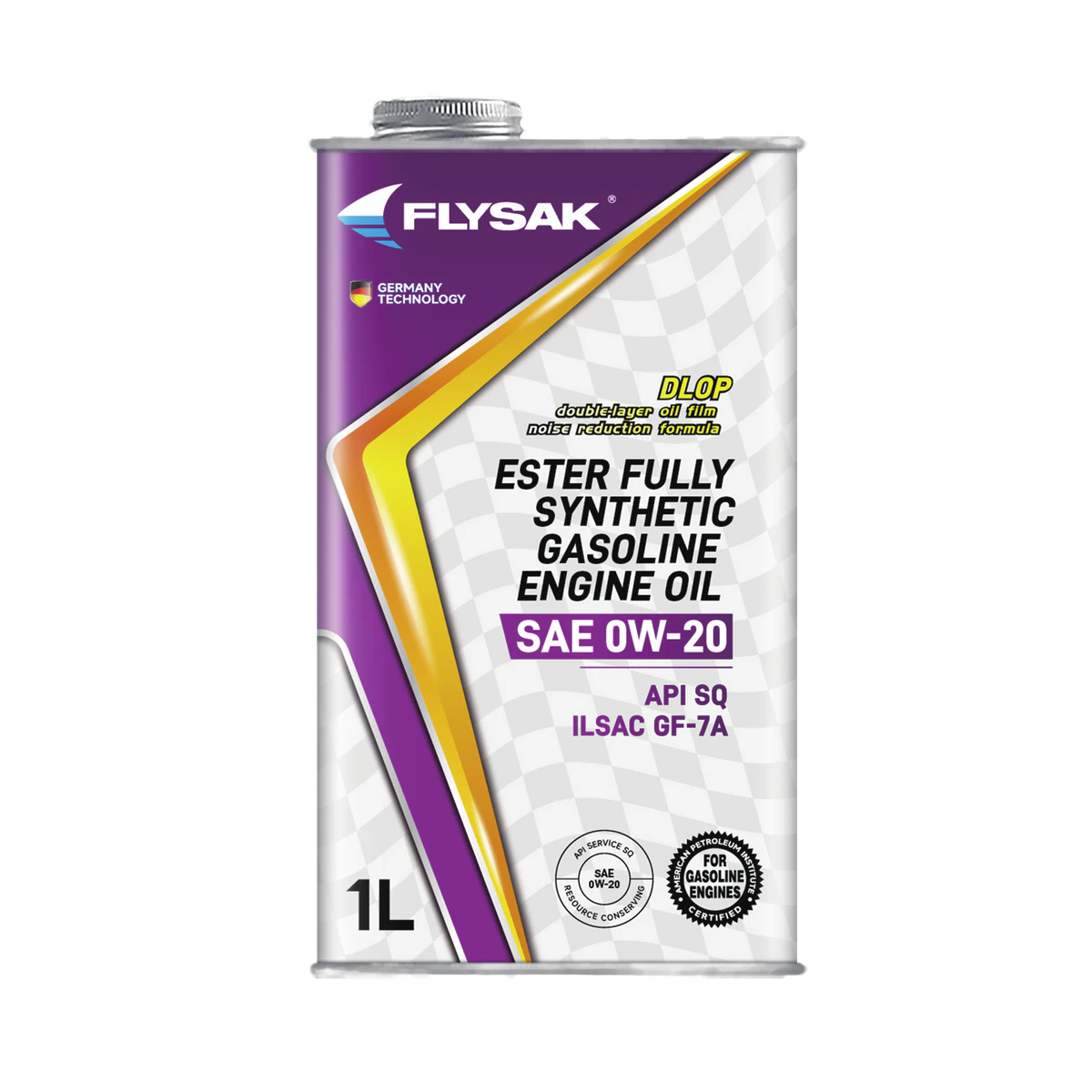
Begin at the certificate header. It should identify the issuing legal entity or laboratory, product name or code, SAE viscosity grade, batch or lot number, manufacture or test date and certificate issue date. Where the order involves a private label, require a documented link between the supplier's internal formulation code and the finished brand and SKU. A generic certificate titled 5W-30 is not enough when several 5W-30 formulations carry different claims.
Match the batch number to the physical trace code on production-representative bottles, cartons and pallet or shipping records. If a bulk blend is divided across several filling runs, establish how the blend batch and packaging lots are related. The objective is to trace a market sample back to the exact released material without relying on memory or a sales spreadsheet.
Check status as well as identity. The COA should indicate whether the batch passed, was approved for release or remains provisional. Identify the authorised reviewer and approval date. A preliminary laboratory printout can support discussion, but it should not silently become the final release certificate attached to shipping documents.
Read every result together with its method, unit and limit
A result has meaning only inside a defined test system. ASTM D445 covers kinematic viscosity measurements for petroleum products, while ASTM D2270 calculates viscosity index from kinematic viscosities at 40°C and 100°C. A COA should therefore distinguish measured viscosity results from the calculated VI and show units clearly. Comparing values produced by different methods or at different temperatures can create a false pass or false failure.
The same discipline applies to other properties. ASTM D2896 is one method for base number, ASTM D5800 covers Noack evaporation loss and ASTM D92 covers Cleveland open-cup flash and fire points. The method designation, version policy and unit should agree with the written specification. Do not copy a limit from another supplier's TDS or a different formulation and apply it to the batch under review.
Not every recognised test belongs on every routine COA. Some performance claims depend on engine tests, formulation qualification, licensing or periodic verification rather than a test performed on each production batch. Agree which properties are tested per batch, which are monitored periodically and which are controlled through formulation and raw-material approval. The COA should reflect that plan instead of implying that a short bench-test list proves an entire service category.
| Reported field | Relevant method context | Review question | Common risk |
|---|---|---|---|
| Kinematic viscosity | ASTM D445 at a stated temperature | Are temperature, unit, result and limits all shown? | Comparing 40°C and 100°C values or mismatched units |
| Viscosity index | ASTM D2270 calculation from 40°C and 100°C viscosity | Do the inputs and calculated value form a consistent set? | Treating VI as a separate direct performance test |
| Base number | ASTM D2896 or another agreed method | Is the method the same as the purchase specification? | Comparing unlike test methods as if results were identical |
| Evaporation loss | ASTM D5800 Noack procedure | Is this batch, periodic or qualification data? | Assuming every specification requires every batch to be tested |
| Flash point | ASTM D92 Cleveland open cup when specified | Are method, unit and acceptance rule stated? | Using one laboratory value as a complete fire-safety assessment |
Use written acceptance limits instead of judging proximity to a typical value
A defensible release decision compares the batch result with an approved lower limit, upper limit or other stated acceptance rule. The TDS typical value is usually a product description, not the centre of a hidden tolerance band. If the supplier has not provided the finished-product specification, ask for the controlled release criteria or agree a buyer specification before approving the order.
Review the result as a set. Viscosity at 40°C, viscosity at 100°C and the calculated viscosity index should be coherent. Product identity, density or other identification checks can help detect a document or sample mix-up. An isolated result inside its limit does not cure inconsistent units, an impossible relationship between fields or a certificate copied from another batch.
Define what happens to an out-of-specification or questionable result. The supplier should quarantine the affected batch, investigate, document any retest or resampling and obtain authorised disposition. A replacement certificate should preserve revision history; it should not simply overwrite an inconvenient value without explaining why the document changed.
Define a risk-based testing and verification plan
The buyer and supplier should agree the routine release panel before production. Include properties that confirm identity and control blending consistency, then define periodic or qualification evidence for claims that are not practical batch tests. The plan can vary by formulation, grade, licence route and risk; a universal COA checklist is less useful than a documented plan for the exact SKU.
For a new supplier, new formulation, first production lot or significant change, consider an independent sample and laboratory comparison. Agree the sampling point, sample seals, custody record, method and decision rule in advance. Testing an untraceable bottle bought after a dispute can create more questions than it answers.
Trend data can reveal drift before a batch crosses a release limit. Ask whether the supplier reviews control charts or historical results for viscosity and other key properties. Do not demand disclosure of confidential formulation details; focus on evidence that the controlled product remains consistent and that meaningful changes trigger buyer notification and reapproval.
| Trigger | Immediate action | Evidence before release |
|---|---|---|
| Missing or mismatched batch identity | Hold document and shipment review | Correct trace link across COA, bottles, cartons and records |
| Method or unit differs from specification | Stop numerical comparison | Written technical reconciliation or approved retest |
| Result outside an agreed limit | Quarantine the batch | Investigation, authorised disposition and controlled replacement evidence |
| Result is unusual but still inside limits | Review trend and sample identity | Technical explanation and additional check where justified |
| Formula, raw material or manufacturing change | Apply change-control procedure | Updated documents, evidence, sample or approval as required |
Connect batch release to packaging and shipping control
The release system continues after the laboratory signs the COA. Receiving buyers need a clear rule for which document travels with the shipment, how electronic certificates are authenticated and how revised copies are controlled. The commercial invoice, packing list and pallet identification should make it possible to separate lots when a container includes more than one batch.
Approve a production-representative filled pack with its batch code, label, seal and carton. For private label, make sure the COA product reference maps to the customer-facing SKU without exposing an ambiguous or unrelated brand. Keep retained samples and document-retention periods proportionate to the sales and complaint cycle in the destination market.
Packaging minimums, mixed-SKU loading, price and lead time should remain in the written quotation. The COA review does not establish those commercial terms. It does, however, prevent a low price from hiding an incomplete batch-release and traceability system.
- Use the private-label engine-oil label checklist — Align claims, trace codes, artwork and technical records before printing.
- Review the FLYSAK private-label workflow — Coordinate product, sample, document, packaging and artwork approval.
Send an RFQ that makes the COA reviewable
Name the destination markets, vehicle groups, SAE grades, API, ACEA or manufacturer requirements, intended licence or claim route, pack sizes, label languages and expected order mix. Ask for the current TDS, SDS, written finished-product specification, representative COA format, claim evidence and change-control procedure for each proposed SKU.
Require the supplier to distinguish per-batch tests from periodic and qualification evidence. State the certificate fields, language and shipment-document process you need, then agree how questions, deviations, retests and revised certificates will be handled. Compare quotations only after suppliers are answering the same technical and traceability scope.
FLYSAK can review a confirmed passenger-car engine-oil range and private-label brief against its current public catalogue. Final product selection, evidence, batch controls, packaging and commercial terms depend on the written project scope and should be reconfirmed before ordering.
- Compare the current engine-oil range — Review published viscosity and performance routes before preparing the document request.
- Send your engine-oil sourcing brief — Share grades, claims, packs, markets and document requirements for review.
Frequently asked questions
What is an engine oil Certificate of Analysis?
It is a batch-specific record of reported test results and release status for an identified product and lot. Its value depends on a clear link to the approved finished-product specification, test methods, units, limits and physical shipment.
Is a COA the same as a Technical Data Sheet?
No. A TDS normally presents representative product properties and positioning, while a COA reports results for an identified batch. Typical TDS values should not be treated as unstated batch acceptance limits.
Does a passing COA prove that engine oil is API licensed?
No. API licensing and API mark authorisation require separate current evidence for the exact marketer, brand, product and viscosity grade. A COA supports batch control but does not replace the API directory or licence scope.
Which tests should appear on every engine oil COA?
There is no single universal panel for every product. The buyer and supplier should agree the batch-release tests for the exact formulation and grade, plus periodic or qualification evidence for claims that are not practical routine batch tests.
Why do ASTM methods and units matter on a COA?
A numerical result is comparable only when the method conditions and units match the agreed specification. Viscosity temperature, base-number method and flash-point procedure can materially change what a number means.
Should an importer use an independent laboratory?
Independent testing can be useful for supplier qualification, first production, significant changes or a documented dispute. Agree sampling, custody, methods and decision rules before testing so the result remains traceable and comparable.
What should happen when a COA result is out of specification?
The batch should be held while the supplier investigates under a controlled procedure. Any resampling, retesting, disposition or replacement certificate should be authorised, traceable and preserved in the revision history.
Sources
Technical and regulatory references reviewed for this article:
- ASTM D445-23 — Kinematic Viscosity of Transparent and Opaque Liquids — Reviewed for the scope and significance of controlled kinematic-viscosity measurement in petroleum-product specifications.
- ASTM D2270-24 — Calculating Viscosity Index from Kinematic Viscosity — Reviewed for viscosity-index calculation from kinematic viscosities at 40°C and 100°C and the interpretation of temperature dependence.
- ASTM D2896-26 — Base Number of Petroleum Products — Reviewed for the method-specific determination of base number by potentiometric perchloric-acid titration.
- ASTM D5800-21(2026) — Evaporation Loss of Lubricating Oils by the Noack Method — Reviewed for the scope and reporting context of lubricant evaporation loss.
- ASTM D92-24 — Flash and Fire Points by Cleveland Open Cup — Reviewed for flash-point method context and ASTM's caution that the result is one element of fire-hazard assessment.
- American Petroleum Institute — Engine Oil Licensing and Certification System — Reviewed to distinguish API licensing and quality-mark authorisation from supplier batch-release documentation.