
Table of contents
- What DEXRON III vs DEXRON VI means to a buyer
- Backward service guidance is not a universal compatibility promise
- Build the application matrix before asking for prices
- Verify the claim level on every proposed SKU
- Compare technical documents, not fluid colour
- Control private-label packaging and product identity
- Send an RFQ that separates technical and commercial decisions
- Frequently asked questions
- Sources
What DEXRON III vs DEXRON VI means to a buyer
DEXRON names identify General Motors transmission-fluid performance generations, but an import decision involves more than choosing III or VI from a catalogue. A buyer needs to know the original fluid requirement, whether later service information permits a replacement, which product is being offered and what evidence supports its label claims.
The distinction matters because DEXRON III-type demand is still associated with older automatic transmissions and some legacy hydraulic or transfer-case applications, while DEXRON VI-type demand includes many later GM automatic transmissions and other applications that specifically call for DEXRON-VI. The same model family can change transmission or fluid requirements across model years and markets.
For range planning, treat the two products as separate decision paths until an exact application is confirmed. A supplier cross-reference can help screen demand, but the current vehicle or equipment instruction remains the controlling source.
| Buyer question | DEXRON III-type route | DEXRON VI-type route | Evidence to request |
|---|---|---|---|
| Which demand does it serve? | Older applications that call for DEXRON II/III or ATF Type III (H) | Applications that specify DEXRON-VI, plus permitted earlier-service replacements | Vehicle and transmission matrix by model year |
| Can it replace the other? | Do not use forward into a DEXRON-VI requirement | Check the equipment maker's replacement guidance for the exact application | Current owner manual, service bulletin or parts guidance |
| What may appear on the label? | Only the precise type or performance claim supported by the supplier | Licensed wording only with valid evidence; otherwise precise type or performance wording | Claim register and licence or test evidence |
| What must be batch-controlled? | Agreed physical properties and product identity | Agreed physical properties and product identity | Written specification and sample COA |
Backward service guidance is not a universal compatibility promise
GM Parts describes its ACDelco DEXRON-VI automatic transmission fluid as backward compatible with previous DEXRON automatic transmission fluids. The same official page says DEXRON-VI is a suitable replacement for ATF Type III (H). This is valuable service guidance for the specified GM product, but an importer should not automatically transfer that statement to every fluid carrying similar wording.
First confirm that the original application really calls for a previous DEXRON fluid. Older manuals can assign DEXRON III to automatic transmissions, transfer cases, power steering or other hydraulic systems, and later service guidance may not be identical for every unit. Second, confirm that the proposed supplier product has an evidence-backed replacement statement for that application.
The direction of substitution also matters. A later product may be accepted for some earlier requirements, but an older DEXRON III-type fluid should not be used in a unit that requires DEXRON-VI unless the manufacturer expressly allows it. Importers should therefore avoid short label claims such as replaces all DEXRON fluids or universal GM ATF.
Build the application matrix before asking for prices
A responsible purchasing brief starts with the vehicles and equipment in the destination market. Record make, model, model year, engine, transmission code, drive configuration and the exact fluid wording from current service information. Where an automatic transmission shares a vehicle name with a CVT, DCT or manual option, separate the variants instead of grouping them under one model.
Next classify each row as confirmed DEXRON III-type demand, confirmed DEXRON VI demand, a manufacturer-specific alternative, or unresolved. Preserve the source and date used for each decision. This prevents sales teams from turning an old catalogue cross-reference into a permanent compatibility claim.
The matrix should also flag the service method. A transmission may need a defined fluid temperature, fill-plug sequence, scan-tool procedure or dry-fill distinction. Those details belong in workshop information, not necessarily on the retail label, but they affect training, technical support and complaint investigation.
Keep CVT, DCT and newer low-viscosity families outside the shortcut
DEXRON III and VI are conventional automatic-transmission-fluid routes. They should not be treated as substitutes for CVT fluid, wet DCT fluid or another manufacturer-specific ATF merely because the products share a colour or a similar viscosity. Current Ford owner information, for example, distinguishes MERCON LV and MERCON ULV requirements and warns against using another fluid. The same specification-led discipline should govern every brand in the buyer's matrix.
- Compare the FLYSAK transmission-fluid range — Review conventional ATF, CVTF, DCTF and MTF product families separately.
- Read the CVT compatibility guide — See why CVT selection requires a transmission-code and claim-evidence review.
- Read the wet vs dry DCT guide — Separate wet-clutch lubricant demand from dry-clutch and gearbox service needs.
Verify the claim level on every proposed SKU
A specification name on a quotation can represent different levels of evidence. It may be a current licence or approval, a supplier's documented performance claim, a laboratory comparison, or only an application reference. These are not equivalent. Ask the supplier to classify every named claim and provide the corresponding evidence before approving packaging.
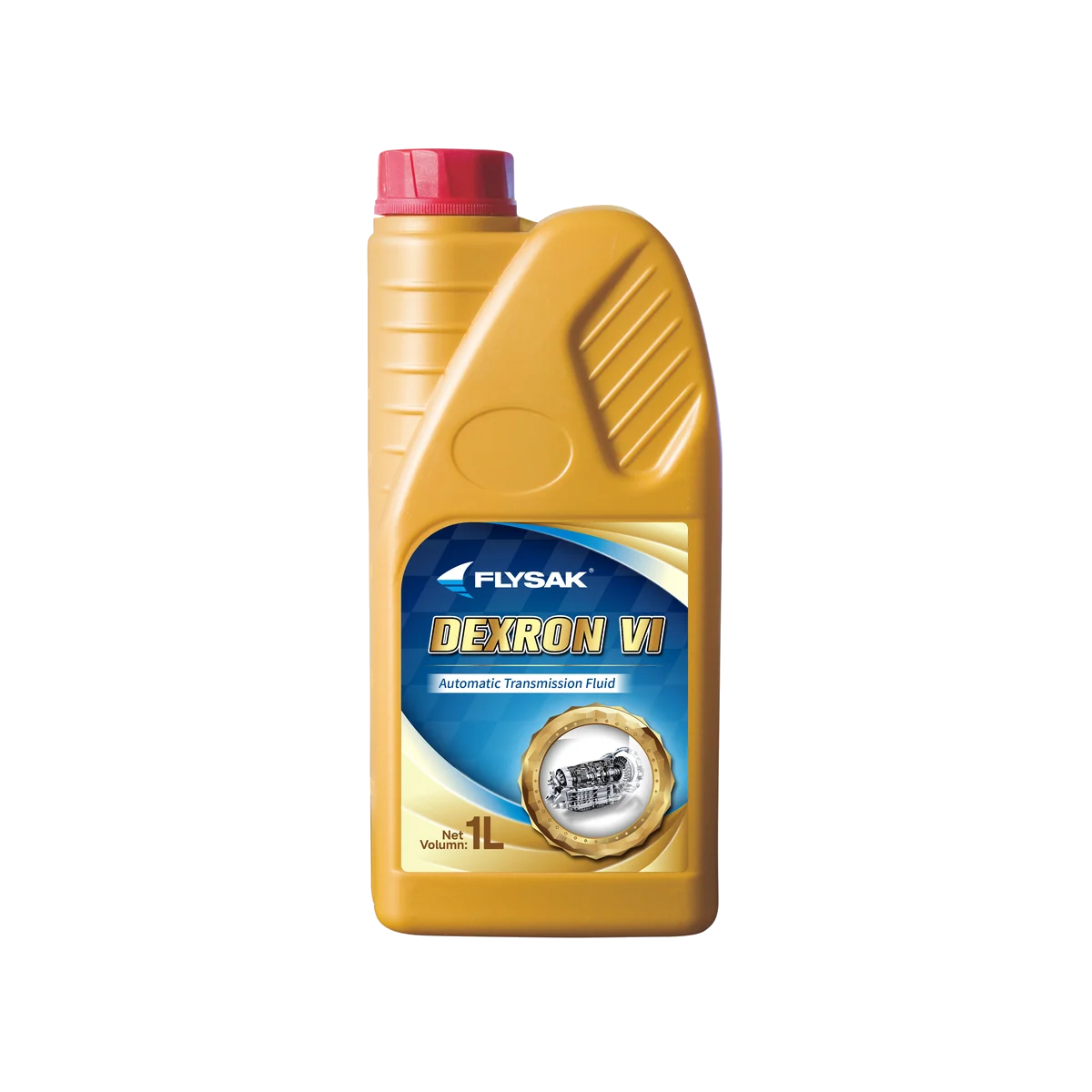
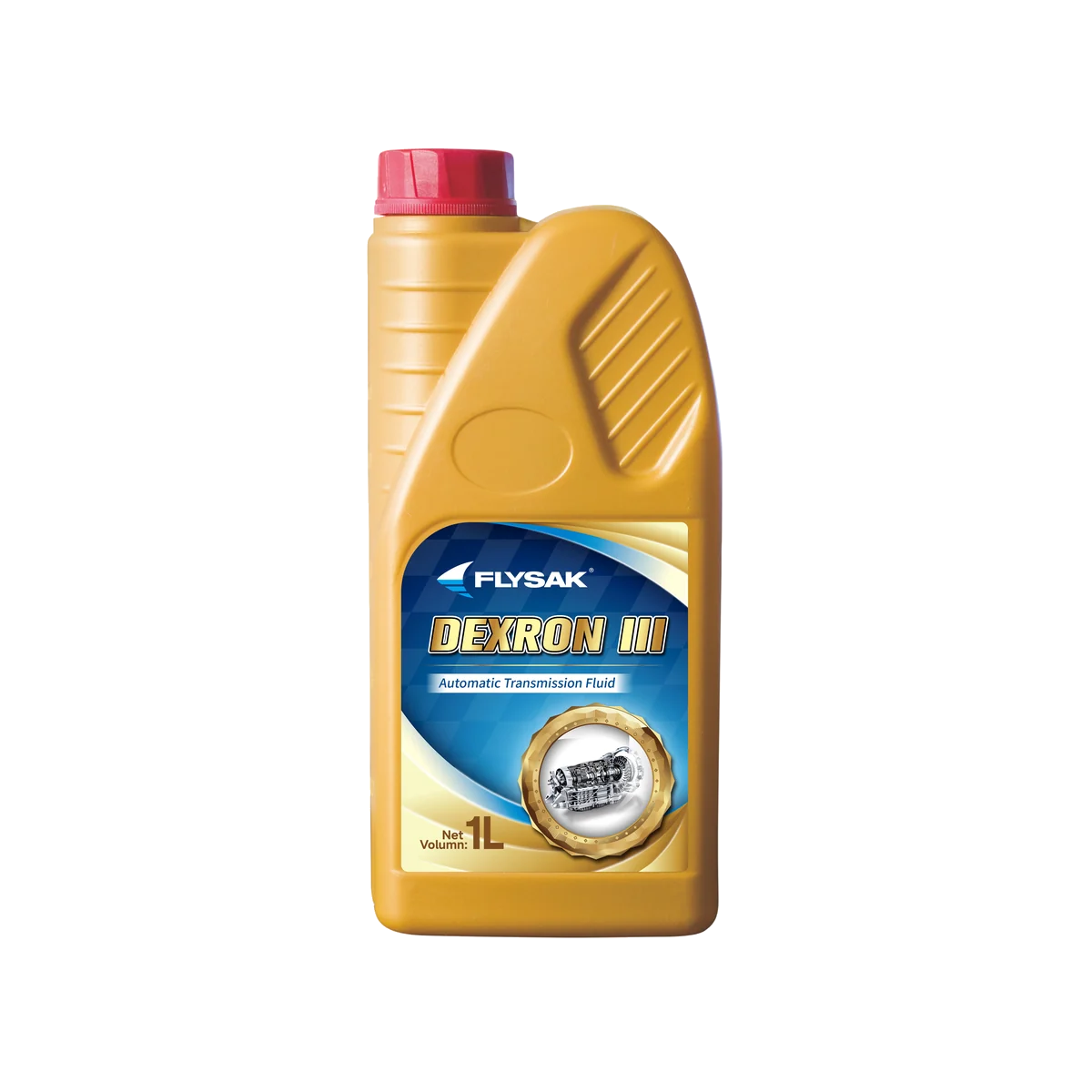
For FLYSAK AT-002 and AT-003, the current public pages use DEXRON III type and DEXRON VI type wording and explicitly state that no blanket vehicle-manufacturer approval is claimed. Importers should preserve that distinction unless a current written licence or approval is supplied for the exact product and brand that will be sold.
The claim register should connect product code, formulation revision, supporting document, label phrase and review date. If the formula, additive system, manufacturing route or licence status changes, the supplier should notify the buyer before production so that technical files and artwork can be reviewed again.
| Claim level | What the buyer should request | Safe purchasing action |
|---|---|---|
| Licensed or approved | Current licence or approval tied to the exact brand and product | Verify scope, validity and permitted mark use |
| Meets a performance profile | Technical basis, test summary and signed supplier statement | Use precise wording; do not call it approved |
| Suitable for an application | Vehicle or transmission matrix and selection rationale | Keep exclusions and source dates visible |
| Cross-reference only | Original manufacturer requirement and current service information | Treat as a lead for review, not final proof |
Compare technical documents, not fluid colour
Red dye does not establish a DEXRON performance level, and appearance cannot confirm friction behaviour, oxidation resistance, shear stability or seal compatibility. Request the current Technical Data Sheet and Safety Data Sheet for the exact formulation. Compare the written product specification as well as typical values; typical data can vary and should not be mistaken for batch-release limits.
The agreed specification should identify the properties used for identity and release, their methods and acceptance limits. A sample Certificate of Analysis should show how a production batch will be reported. If a quotation uses one set of documents for several private labels, confirm that the formulation and claim scope are genuinely the same.
Do not reduce the comparison to viscosity at one temperature. Automatic transmission performance depends on a balanced system, including friction response, viscosity across the operating range, oxidation control, wear protection, aeration and material compatibility. Ask how the supplier supports the complete claim rather than requesting a single impressive number.
Control private-label packaging and product identity
A technically correct fluid can still create market problems if the pack blurs the selection rule. Keep the product code, fluid type and principal application visible. Avoid graphics or wording that imply universal coverage, official endorsement or interchangeability that the evidence does not support.
Approve the filled bottle rather than artwork alone. Check bottle and cap compatibility, induction seal, leakage resistance, label adhesion, batch-code readability, carton strength and barcode ownership. Confirm label languages and destination-market requirements with the importer's local compliance adviser.
Product identity must remain traceable after arrival. The finished batch code should connect the fluid blend, filling record and packaging lots. Retained samples, complaint records and a written change-notification process make it possible to investigate a field report without guessing which formula or label was supplied.
| Approval item | Evidence before production | Buyer decision |
|---|---|---|
| Application wording | Reviewed matrix and claim register | Approve exact label phrases and exclusions |
| Technical file | Current TDS, SDS, specification and sample COA | Confirm one product identity across all documents |
| Finished pack | Filled sample, seal, label, batch code and carton | Approve physical pack and artwork together |
| Change control | Written notice triggers and revised-evidence process | Define when samples or artwork require reapproval |
- Review FLYSAK AT-002 DEXRON III type — Check the current product profile, pack and evidence boundaries.
- Review FLYSAK AT-003 DEXRON VI type — Compare the later performance profile and product selection notes.
- See private-label options — Plan artwork, packaging and document approval for a new or existing brand.
Send an RFQ that separates technical and commercial decisions
List the destination markets, vehicle and transmission matrix, required DEXRON routes, estimated volume by SKU, pack sizes, label languages, carton needs and sales channels. Attach the current range if you are replacing a supplier, and mark applications that remain uncertain.
Ask the supplier to return a product map, claim status, current documents, sample plan, finished-pack options, batch-release proposal and change-control terms. Only then compare prices, packaging minimums, mixed-SKU options, payment terms, loading plans and lead times on the same technical scope.
FLYSAK can review confirmed DEXRON III-type and DEXRON VI-type demand against its current ATF catalogue and prepare a private-label proposal. Product selection, claim wording, documents, packaging and commercial terms remain subject to the final written offer.
- Use the automatic transmission fluid supplier guide — Extend the comparison to supplier auditing, sampling and landed value.
- Send your ATF sourcing brief — Share the vehicle matrix, product routes, pack sizes and order plan for review.
Frequently asked questions
What is the main difference between DEXRON III and DEXRON VI?
They represent different GM transmission-fluid performance generations. DEXRON VI is the later route and is used in many newer GM applications, while DEXRON III-type demand is associated with earlier requirements. The exact vehicle or equipment instruction determines the correct fluid.
Can DEXRON VI replace DEXRON III?
GM Parts states that its genuine ACDelco DEXRON-VI product is backward compatible with previous DEXRON automatic transmission fluids and is a suitable replacement for ATF Type III (H). Confirm the exact application and do not assume that every aftermarket DEXRON VI-type product carries the same evidence or permission.
Can DEXRON III be used where DEXRON VI is required?
Not unless the vehicle or transmission manufacturer explicitly permits it. Do not treat backward service guidance as forward compatibility. Use a product supported for the exact DEXRON-VI requirement.
Is DEXRON VI suitable for every automatic transmission?
No. Other transmissions may require MERCON, ATF+4, CVTF, DCTF, a transmission-maker specification or another dedicated fluid. Confirm the transmission code and current manufacturer requirement.
Does red ATF colour prove DEXRON compatibility?
No. Dye is not a performance specification. Verify the product identity, claim basis, technical documents and exact application rather than selecting by colour.
What documents should an importer request for DEXRON-type ATF?
Request the current TDS, SDS, written product specification, claim or licence evidence, application matrix, sample COA, finished-pack proof and change-control procedure. All documents should identify the same proposed formulation and brand claim.
How should DEXRON III-type and DEXRON VI-type quotations be compared?
Compare like technical scope: application coverage, claim level, document set, pack and carton, artwork, batch controls, change terms, trade terms and loading plan. Do not compare price per litre until the products and evidence are aligned.
Sources
Technical and regulatory references reviewed for this article:
- GMC Parts — ACDelco GM Original Equipment DEXRON-VI ATF — Reviewed for GM's current DEXRON-VI product guidance, backward-compatibility statement, ATF Type III (H) replacement answer and owner-manual selection advice.
- General Motors — 2026 Chevrolet Silverado 1500 Owner Manual — Reviewed as current manufacturer evidence that DEXRON-VI can be specified for a defined vehicle system rather than selected by fluid colour or generation alone.
- General Motors — 2006 Duramax Diesel Owner Manual — Reviewed for historical examples of DEXRON-III and DEXRON-VI being assigned to different systems and applications within manufacturer service information.
- Ford Owner Information — Automatic Transmission Fluid Capacity and Specification — Reviewed for current specification-led selection guidance and the need to keep other manufacturer-specific ATF families outside DEXRON shortcuts.