

Table of contents
- Begin with the vehicle population, not the most familiar grade
- Read an SAE viscosity grade correctly
- Give each viscosity grade a documented role in the range
- Separate viscosity from API, ILSAC, ACEA and OEM claims
- Control SKU overlap before adding packaging variants
- Approve the document, label and batch route as one SKU
- Send an RFQ that can be converted into a range matrix
- Frequently asked questions
- Sources
Begin with the vehicle population, not the most familiar grade
A distributor often begins with a list such as 0W-20, 5W-30 and 10W-40 because those grades are recognised in the market. That is a useful hypothesis, not a purchasing specification. The same grade can appear across products with different API, ILSAC, ACEA or OEM performance routes, and two vehicles using the same viscosity may still require different oil claims.
Build a worksheet from reliable local inputs: active registrations or fleet data, important makes and powertrains, model years, current owner-manual or service requirements, workshop sales history, competitor shelf checks and the buyer's intended channel. Record the specified viscosity and performance route together. Where the application remains uncertain, mark it unconfirmed instead of using a broad statement such as suitable for all Japanese or European cars.
Rank each combination by addressable vehicles, expected repeat demand, margin role and risk of misapplication. The first order should cover the strongest documented clusters. A grade that appears frequently but splits across incompatible performance requirements may need more than one product; a less common grade may not justify a launch SKU even when a supplier can make it.
| Field | Evidence to collect | Range decision |
|---|---|---|
| Vehicle cluster | Makes, models, engines and model years | Group only applications with the same confirmed requirement |
| SAE viscosity | Current owner manual or OEM service information | Record the required grade and any permitted alternatives |
| Performance route | API, ILSAC, ACEA and OEM specification wording | Create a separate SKU when the claim set materially differs |
| Demand | Workshop history, distributor orders and vehicle-parc evidence | Prioritise repeatable volume over catalogue length |
| Pack and channel | Retail, workshop or fleet usage pattern | Choose only the packs the channel can turn efficiently |
Read an SAE viscosity grade correctly
SAE J300 defines engine-oil viscosity classification in rheological terms. In a multigrade such as SAE 5W-30, the W portion relates to defined low-temperature cranking and pumping behaviour, while the second number identifies the high-temperature viscosity grade. The notation helps classify flow behaviour across operating conditions; it does not grade overall quality or prove that the oil passes an engine-performance standard.
A lower W number should not be converted into a universal cold-climate recommendation, and a higher second number should not be sold as automatically stronger protection. Engine design, oil-pump calibration, bearing clearances, fuel-economy strategy and after-treatment compatibility are part of the manufacturer's decision. The correct purchasing question is not which number sounds safer, but which complete requirement the target vehicle specifies.
Keep the two axes separate in the database. One column should hold the SAE grade. Other columns should hold API or ILSAC category, ACEA sequence, OEM specification or approval status, and evidence date. This prevents the catalogue, artwork and sales team from treating viscosity as shorthand for every other product attribute.
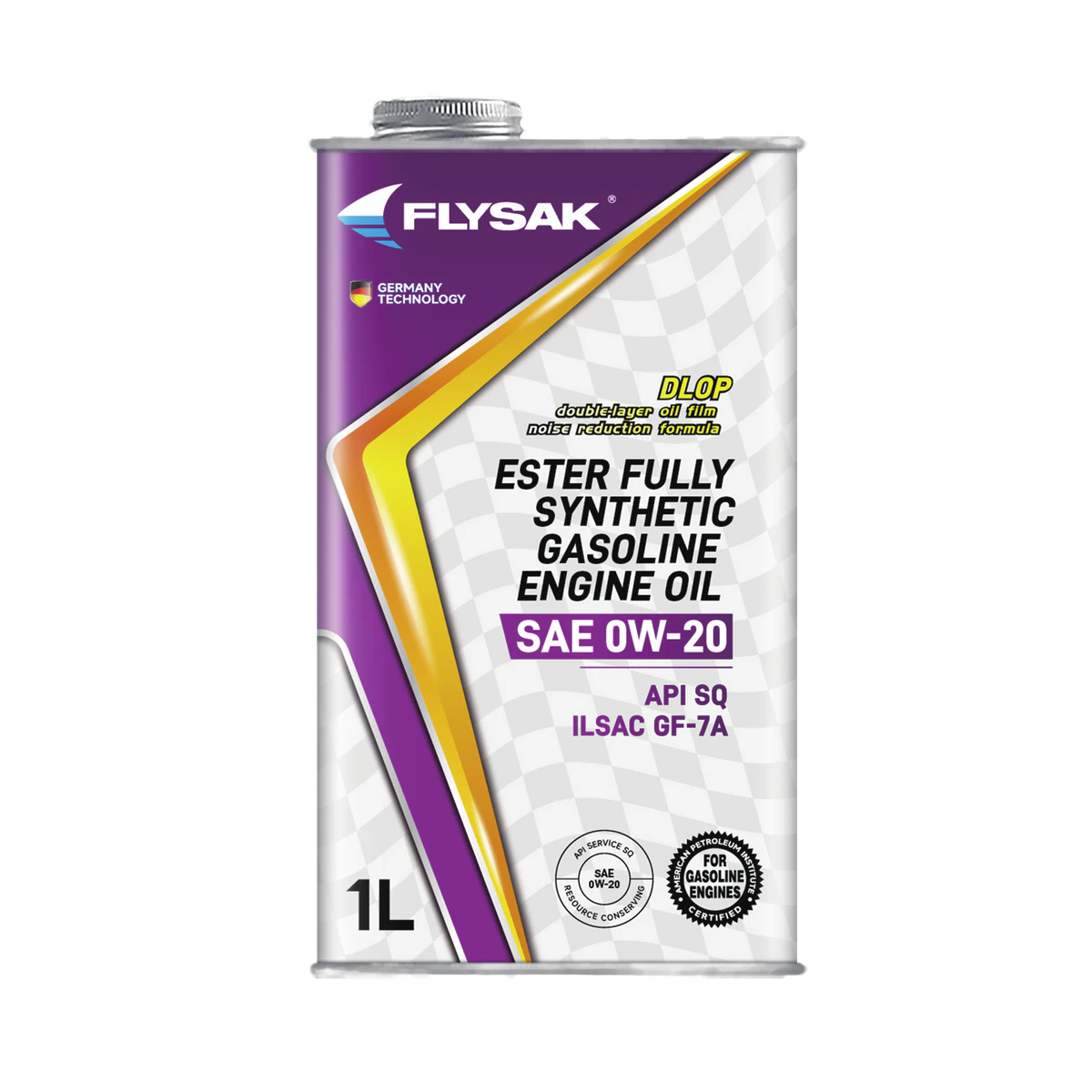
- Review FLYSAK EO-021 SAE 0W-20 — See one current 1L product page where viscosity and stated performance level are shown separately.
Give each viscosity grade a documented role in the range
A viscosity chart for procurement should describe why a grade is being considered, not promise vehicle fitment. Use the table below as a range-planning prompt, then replace each general role with evidence from the destination market. Several rows may be unnecessary, and one row may require multiple performance variants.
The FLYSAK public passenger-car catalogue currently includes products from SAE 0W-20 through 20W-50 across different stated performance levels. That breadth should not be copied directly into every importer programme. Confirm the current product, documents, packaging and claim basis for each proposed SKU; availability of one grade does not establish compatibility with a particular vehicle.
| SAE grade | Possible range role | Confirm before stocking |
|---|---|---|
| 0W-16 | Vehicles that specifically require this low-viscosity grade | Exact vehicle requirement and compatible performance category |
| 0W-20 | Modern gasoline and hybrid clusters where specified | API or ILSAC route, ACEA or OEM requirement, and model coverage |
| 0W-30 | Low-temperature and European-oriented applications where specified | Required ACEA sequence or OEM specification, not viscosity alone |
| 5W-20 / 5W-30 | Broad passenger-car clusters in markets where manuals specify them | Model years, gasoline or diesel route, and required performance claims |
| 5W-40 | Applications specifying a wider multigrade operating range | ACEA or OEM route and after-treatment compatibility |
| 10W-30 / 10W-40 | Established vehicle populations where manufacturer guidance permits | Cold-start conditions, engine requirement and channel demand |
| 15W-40 / 20W-50 | Selected older or market-specific passenger applications where specified | Do not infer suitability from climate or vehicle age alone |
Separate viscosity from API, ILSAC, ACEA and OEM claims
API's current Motor Oil Guide lists API SQ and ILSAC GF-7A and GF-7B among the current passenger-car routes introduced in March 2025. It also makes a viscosity-specific distinction: GF-7B applies only to SAE 0W-16. This is a good example of why the performance category and viscosity must be checked together rather than selected independently at the end of the project.
ACEA's 2023 Light-duty Oil Sequences add another layer for European-oriented applications. The sequences define performance categories, and ACEA highlights C7-23 as a 0W-16 route. An SAE 0W-16 product is not automatically ACEA C7, just as a 5W-30 product is not automatically suitable for every ACEA or OEM requirement associated with that viscosity.
For every candidate SKU, request the current TDS and supporting claim evidence. If API marks are proposed, verify the exact marketer, brand, product, viscosity grade and category in the live API EOLCS Directory and review the final artwork. If an OEM approval is claimed, ask for evidence tied to the exact product and confirm whether the wording is a formal approval, a performance claim or a supplier recommendation.
- Use the API engine oil license verification guide — Follow a repeatable directory, product and artwork check before buying API-marked oil.
- Read the hybrid engine oil supplier guide — See how viscosity, performance routes and vehicle requirements are separated for hybrid applications.
Control SKU overlap before adding packaging variants
Every added viscosity-performance combination multiplies when pack sizes, labels and price positions are introduced. Three similar 5W-30 products in 1L, 4L and 5L packs can become nine stock lines before cartons, languages or brands are counted. That complexity affects forecasts, artwork control, purchasing, warehouse slots and the risk of sending the wrong product.
Map each SKU to a clear job. A lead product may cover the largest modern vehicle cluster; a second may serve a distinct European performance route; an established-grade product may protect workshop demand for an older parc. If two products serve the same vehicles, channel and price position, require a commercial reason for keeping both. Otherwise concentrate volume into the better-supported SKU.
Package planning should follow the channel. A workshop pack, a retail top-up pack and a consumer service-fill pack solve different jobs. FLYSAK's public catalogue shows 1L for the current ester API SQ line and 1L, 4L and 5L references for many other passenger-car products, but the exact pack and order mix must be reconfirmed for the proposal. Do not print an availability or MOQ claim from a catalogue assumption.
| Question | Keep or add the SKU when | Pause or combine when |
|---|---|---|
| Does it close a coverage gap? | A documented vehicle cluster needs a different grade or performance route | Another approved SKU covers the same requirement |
| Is demand repeatable? | Sales history or vehicle-parc evidence supports replenishment | The request is isolated or speculative |
| Does the pack have a channel job? | Retail, workshop or fleet usage supports the size | It only duplicates a slow pack |
| Can the team control it? | Artwork, warehouse code and documents remain unambiguous | Similar packs create a high mispick or misapplication risk |
Approve the document, label and batch route as one SKU
A purchase code should connect five records: the approved formulation or product, the exact claim set, the current document package, the final label and the batch trace code. If any one changes, procurement needs a defined review step. This prevents a familiar viscosity label from being applied to a product with a different performance route or document status.
Request a current TDS and SDS, representative COA, applicable licensing or performance evidence, finished-pack sample, batch-code format and written change-control process. Compare the viscosity and claim wording across all files. A supplier's company certificate does not resolve a mismatch between quotation, TDS, label and licensed product record.
Make similar products visually distinguishable. Use prominent grade and performance information, unique item codes and scannable warehouse labels. Review front, back, carton and master-data copy together. The best technical range can still fail commercially if sales staff or warehouse operators cannot tell two near-identical bottles apart.
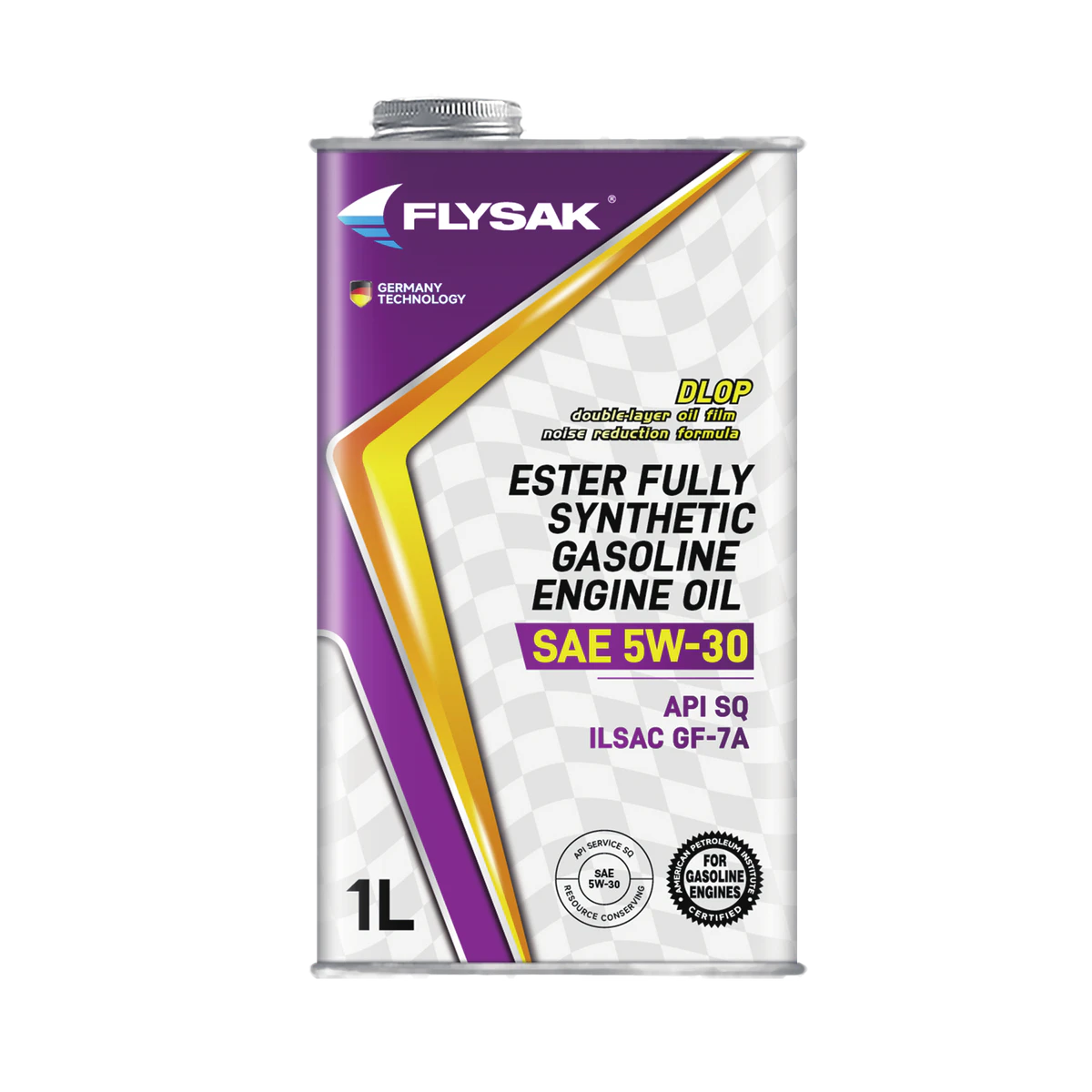
- Review FLYSAK EO-023 SAE 5W-30 — Compare a second current 1L product reference and its stated performance route.
- Review the private-label workflow — Organise product, sample, packaging, artwork and document approvals before ordering.
Send an RFQ that can be converted into a range matrix
A useful RFQ names the destination countries, vehicle clusters, model years, required SAE grades, API or ILSAC categories, ACEA or OEM requirements, channel, pack sizes, label languages and expected SKU mix. Attach the buyer's application worksheet and ask the supplier to mark supported, conditional and unsupported rows. This is more useful than requesting every available viscosity and asking for the lowest price.
Ask the quotation to identify the exact product for every row and return the current TDS, SDS, representative COA, applicable license or approval evidence, pack details, batch-code route and artwork requirements. Request MOQ, lead time and mixed-order conditions only for the confirmed combination; these commercial terms depend on the actual product and packaging scope and should not be assumed from another SKU.
Review the proposal as a portfolio. Calculate how many unique formulations, labels, pack components and warehouse codes it creates, then compare that complexity with the documented coverage gained. FLYSAK importers can use the current passenger-car catalogue as a shortlist and send the resulting matrix for product and private-label review.
- Compare the current passenger car engine oil catalogue — Shortlist published FLYSAK grades and stated performance levels before requesting current documents.
- Send your engine oil range brief — Share the destination market, vehicle clusters, required claims, pack plan and target SKU mix.
Frequently asked questions
What do the numbers in an engine oil viscosity grade mean?
In a multigrade such as SAE 5W-30, the W portion relates to defined low-temperature cranking and pumping behaviour, while the second number identifies the high-temperature viscosity grade. SAE J300 classifies these rheological properties; it does not by itself establish engine compatibility or overall oil quality.
Is 0W-20 better than 5W-30?
Neither grade is universally better. The correct choice depends on the vehicle manufacturer's requirement, engine design, operating conditions and required performance specification. An importer should map each grade to confirmed vehicle applications rather than rank the numbers as quality levels.
Can one viscosity grade cover every passenger car in a market?
No. Vehicle populations commonly require different viscosities and different API, ILSAC, ACEA or OEM performance routes. Even vehicles using the same SAE grade may need separate products because their performance requirements differ.
How many engine oil SKUs should a new importer launch?
There is no universal number. Start with the smallest set that covers the strongest documented vehicle and channel clusters, can be supported with current evidence, and can turn at a healthy rate. Add a SKU when it closes a measurable coverage gap rather than simply making the catalogue longer.
Does a higher viscosity mean better engine protection?
Not automatically. A higher number changes the viscosity classification but does not prove superior performance or suitability. Using a grade outside the manufacturer's recommendation can affect lubrication and operation. Evaluate the complete vehicle requirement and product specification.
Should importers stock both API and ACEA oils in the same grade?
Only when the target vehicle population and manufacturer requirements justify both routes. API, ILSAC and ACEA categories are not interchangeable labels. Map each product to the exact applications and supporting evidence before creating overlapping SKUs.
What documents should be requested for each engine oil grade?
Request the current TDS and SDS, representative COA, applicable API license or OEM-claim evidence, finished label and pack sample, batch-code format and change-control terms. Match the product name, viscosity and performance claims across every record.
Sources
Technical and regulatory references reviewed for this article:
- SAE J300_202405 - Engine Oil Viscosity Classification — Reviewed for the current SAE engine-oil viscosity classification scope and the distinction between rheological classification and other oil characteristics.
- API Motor Oil Guide — Reviewed for current API and ILSAC passenger-car categories, vehicle-manufacturer-first selection guidance and the viscosity limitation of the GF-7B route.
- API 1509 - Engine Oil Licensing and Certification System, 24th Edition — Reviewed for the July 2026 edition of the API licensing system and the control of licensed engine-oil marks and product claims.
- ACEA Oil Sequences 2023 - Light-duty Engines — Reviewed for current light-duty performance-sequence context and the C7-23 route associated with SAE 0W-16.