
Table of contents
- Start with the hybrid vehicles in the destination market
- Keep engine oil separate from other hybrid driveline fluids
- Choose viscosity from the vehicle requirement, not a hybrid stereotype
- Understand what API SQ and ILSAC GF-7 claims mean
- Treat ACEA and OEM requirements as distinct routes
- Ask for evidence that follows the exact product
- Design the range and packaging around buyer decisions
- Control samples, production batches and later changes
- Send an RFQ that a technical supplier can answer
- Frequently asked questions
- Sources
Start with the hybrid vehicles in the destination market
Hybrid electric vehicles combine an internal-combustion engine with one or more electric motors, but the way those components share work varies. The U.S. Department of Energy distinguishes mild and full hybrids and notes that their engine, motor and driveline arrangements are not identical. For an importer, that means hybrid is a vehicle class, not an engine-oil specification.
Begin with a vehicle-parc worksheet. Record the important makes, models, model years, engine codes and sales channels in the target market. Then capture the viscosity and performance requirement from current owner manuals or service information. A range designed for Japanese and Korean hybrids may look different from one aimed at European plug-in hybrids, ageing imported vehicles or mixed workshop fleets.
The supplier should be willing to review that worksheet and show which proposed products cover each group, which applications still need confirmation and which should remain outside the label claim. A smaller, defensible range is more useful than a catalogue that claims universal hybrid compatibility.
- Target countries, climate zones and important hybrid makes and models.
- Model years, engine codes and the source of each oil requirement.
- Retail, workshop, dealer-alternative or fleet sales channel.
- Required pack sizes, label languages and expected volume by SKU.
Keep engine oil separate from other hybrid driveline fluids
A hybrid may contain several lubricated systems, and their fluid requirements cannot be inferred from the word hybrid. The gasoline engine uses engine oil. Depending on the powertrain design, the transmission or power-split device may require a specific e-CVT, ATF, DCTF or dedicated hybrid transmission fluid. Separate reduction gears, differentials or electric-drive units may have their own requirements.
This distinction matters in sourcing, label design and distributor training. An engine-oil product page should not imply that the same fluid can be used in the transmission or electric drive. Likewise, a supplier cross-reference for an e-CVT or DHT fluid should identify the exact application basis instead of borrowing the engine-oil claim.
| Vehicle system | Primary requirement source | Importer control |
|---|---|---|
| Gasoline engine | Owner manual or current service information | Confirm SAE viscosity, performance category and interval guidance |
| e-CVT, automatic transmission or DHT | Transmission code and OEM fluid requirement | Use a separately approved transmission-fluid application list |
| Electric drive, reduction gear or differential | Exact vehicle and drive-unit service information | Do not infer suitability from engine-oil or ATF claims |
Choose viscosity from the vehicle requirement, not a hybrid stereotype
Many modern hybrids use low-viscosity engine oils, but low viscosity is not a universal fitment rule. SAE J300 defines engine-oil viscosity grades in rheological terms; it does not define all the performance, approval or application requirements of an oil. The buyer therefore needs both the correct SAE grade and the correct performance profile.
Do not automatically replace a required 0W-16, 0W-20, 0W-30 or 5W-30 with whichever low-viscosity product is easiest to source. Even when a manual permits a temporary alternative, the conditions and next-service instruction may be model-specific. The label and application list should follow the manufacturer requirement rather than turn an exception into a blanket recommendation.
Do not select by climate alone
Ambient temperature is relevant, but it is only one input. Engine design, bearing clearances, oil-pump strategy, emissions hardware, fuel-economy calibration and the manufacturer's validation all influence the specified grade. A hotter market does not automatically justify moving every hybrid to a thicker oil.
Build a traceable coverage matrix
For each proposed SKU, list the exact viscosity, performance categories, supported vehicle groups and evidence source. Mark uncertain applications for technical review. This matrix becomes the basis for catalogue copy, sales-team training and later artwork changes.
Understand what API SQ and ILSAC GF-7 claims mean
API's current Motor Oil Guide lists API SQ, ILSAC GF-7A and GF-7B as categories introduced in March 2025. The guide describes protection areas that include fresh- and aged-oil low-speed pre-ignition, timing-chain wear, high-temperature deposits, sludge and varnish control. API SQ with Resource Conserving corresponds to ILSAC GF-7A, while GF-7B applies only to SAE 0W-16 oils.
Those categories are useful for range planning, but a printed claim and an API licence are not the same thing. API's branding guidance limits its quality marks to properly licensed products and specifies different marks for GF-7A and GF-7B. Importers should check the proposed product and marketer in the current API licensing system before approving an API mark or licence statement on private-label artwork.
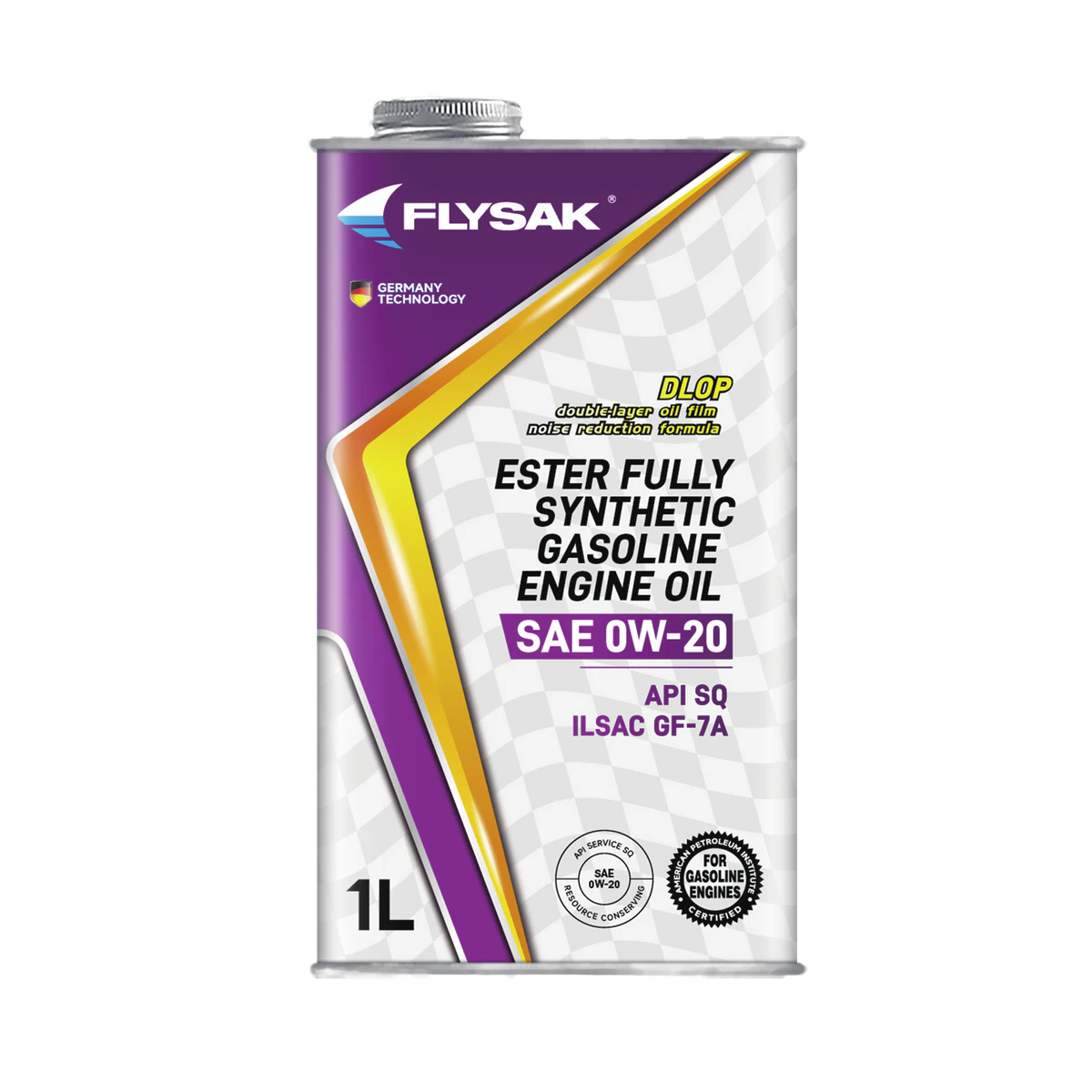
FLYSAK's current catalogue includes an API SQ and ILSAC GF-7A SAE 0W-20 product as one possible starting point for modern gasoline and hybrid passenger-car programmes. Final fitment still depends on the vehicle requirement, and the current product documents and licence evidence should be reviewed before ordering or printing claims.
- Review the FLYSAK API SQ GF-7A 0W-20 product — See the current product profile, pack reference and document request path.
Treat ACEA and OEM requirements as distinct routes
European-market hybrids may call for an ACEA category, an OEM specification or both. ACEA's 2023 Light-duty Oil Sequences added C7-23 for 0W-16 oils and continues other categories such as C5 and C6. These are defined performance routes, not synonyms for hybrid engine oil. The vehicle requirement should decide which route belongs in the range.
Ask the supplier to state whether an ACEA or OEM statement is supported by a complete test programme, a formal approval, a documented formulation claim or an application reference. Those evidence levels should not be presented as equivalent. The proposed label must also identify the edition or claim basis used during development and comply with current ACEA and trademark requirements.
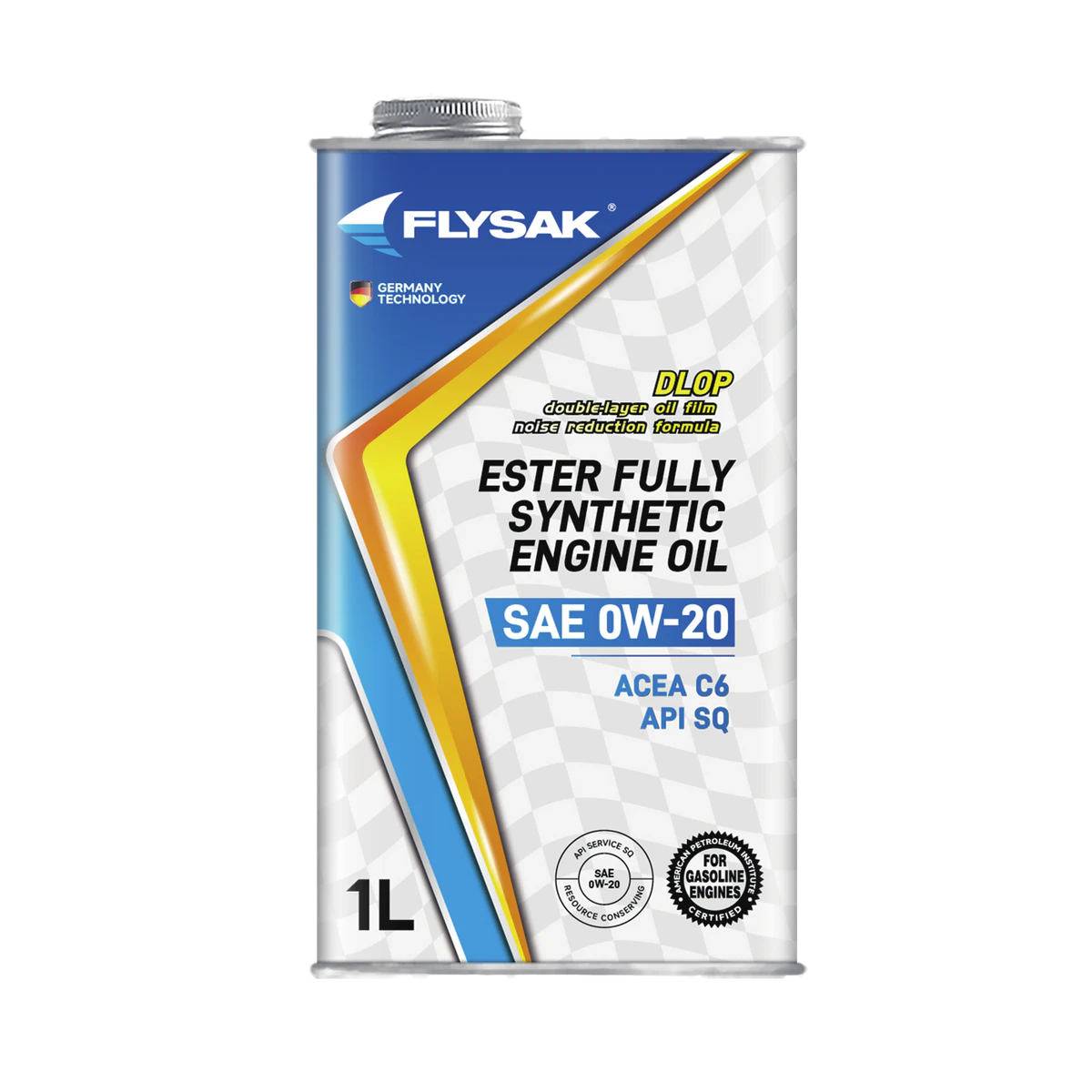
FLYSAK currently lists SAE 0W-20 products positioned around ACEA C5 and ACEA C6. They may support different market segments, but neither should be promoted as a universal European-hybrid oil. Review the current TDS and the exact vehicle requirement before building an application statement.
- Review the FLYSAK API SQ ACEA C6 0W-20 product — Compare its stated performance route and request the current documents.
- Compare the FLYSAK passenger-car engine oil catalogue — Review the available viscosities, performance levels and pack references.
Ask for evidence that follows the exact product
A supplier evaluation should connect the commercial product name, formulation code, test evidence, TDS, SDS, batch COA and approved label. If those records use unrelated names or generic family descriptions, the buyer may not be able to prove that the shipped fluid is the product that was reviewed.
The TDS should show the viscosity grade, claim framework, application limits and representative properties. The SDS supports transport and workplace handling. A batch COA should report the agreed release tests for the shipped batch; it is not a substitute for the performance data used to establish API, ILSAC, ACEA or OEM claims.
| Review point | Evidence to request | Buyer decision |
|---|---|---|
| Viscosity and application | Current TDS plus vehicle coverage matrix | Confirm each target vehicle group |
| API or ILSAC positioning | Claim basis and current licence evidence where applicable | Approve only supported wording and marks |
| ACEA or OEM positioning | Test, approval or documented claim basis | Keep evidence levels distinct |
| Batch release | Sample COA and agreed release limits | Define routine controls before production |
| Private-label artwork | Final bottle, label and carton proof | Check traceability, language and destination rules |
Design the range and packaging around buyer decisions
A hybrid-oil programme does not need a separate bottle for every model, but it does need clear boundaries. Group vehicles only when their viscosity and performance requirements genuinely overlap. A practical starting range may contain one high-coverage Asian-market product, one European light-duty route and a separate SKU for an important viscosity gap, but the actual mix should come from the vehicle matrix rather than a fixed template.
Review the finished pack, not only a label PDF. Check the bottle, cap, seal, label stock, print durability, batch code, carton and pallet plan with production-representative samples. Low-volume specialty SKUs can create disproportionate label and carton inventory, so compare the minimum order and mixed-container conditions on the same packaging basis without assuming that every viscosity can share the same commercial setup.
Destination-market language, chemical and consumer-label requirements remain the importer's responsibility. Complete the compliance review before mass printing and record who approves artwork revisions.
Control samples, production batches and later changes
Approve a representative fluid sample and finished-pack sample against a written specification. For production, confirm raw-material identification, blending records, in-process checks, filling controls, batch coding, retained samples and final release authority. These controls make the approved range repeatable and give both parties a useful starting point if a distributor complaint is reported.
Agree change control before the first order. A change in formulation, additive source, base oil, dye, bottle resin, cap, label stock, test method or licence status may affect claims, registrations or customer communication. Define which changes require advance notice, new documents, a fresh sample or written buyer approval.
Also set a review date for the vehicle coverage matrix. New models, revised manuals and new oil categories can change the best range even when the physical product has not changed.
Send an RFQ that a technical supplier can answer
A useful RFQ names the destination markets, important hybrid vehicles and engine codes, required viscosities and performance categories, pack sizes, label languages, annual estimate and first-order mix. Attach the current range if you are changing suppliers and identify applications that have caused fitment or sales questions.
Ask the supplier to return a proposed SKU map, unsupported or uncertain applications, current documents, sample plan, packaging options, batch-release approach and change-control terms. This response is more valuable than a price list headed hybrid oil because it shows whether the supplier can manage the programme after the first shipment.
FLYSAK can review a buyer's hybrid vehicle list against its current passenger-car engine oil catalogue and prepare a private-label proposal based on the confirmed product and packaging scope. Request current evidence for every proposed claim before approving the range.
- Review FLYSAK private-label support — See how product, packaging and buyer-document decisions are organised.
- Read the engine oil sludge prevention guide — Use it as workshop education for maintenance and oil-condition discussions.
- Send your hybrid engine oil sourcing brief — Share the vehicle mix, viscosity list, pack sizes and first-order plan.
Frequently asked questions
Do hybrid cars need a special engine oil?
They need engine oil that matches the vehicle manufacturer's required SAE viscosity and performance category. Some products are marketed for hybrid use, but the word hybrid alone does not establish fitment. Confirm the exact vehicle, engine, market and current manual requirement.
Is SAE 0W-20 suitable for every hybrid vehicle?
No. Hybrid vehicles can require different viscosities, including grades such as 0W-16, 0W-20, 0W-30 or others. Use the current owner manual or service information for the exact vehicle rather than selecting by the hybrid label or climate alone.
What is the difference between ILSAC GF-7A and GF-7B?
API's current Motor Oil Guide states that GF-7A covers eligible passenger-car engine oils across its defined viscosity scope, while GF-7B applies only to SAE 0W-16. The API Starburst and Shield marks also have different licensing and display rules.
Can hybrid engine oil be used in an e-CVT or DHT?
Not unless the vehicle manufacturer explicitly specifies that fluid. Engine oil, e-CVT fluid, DHT fluid, ATF and electric-drive lubricants are separate application decisions. Confirm the transmission or drive-unit code and required fluid.
Which documents should an importer request from a hybrid engine oil supplier?
Request the current TDS, SDS, performance-claim or licence evidence, vehicle coverage matrix, representative properties, sample COA, written product specification, finished-pack proof and change-control procedure. The documents should trace to the exact proposed formulation and label.
How should hybrid engine oil supplier quotations be compared?
Compare the same viscosity, performance category, claim evidence, pack size, carton, label scope, order mix and trade term. Include sample costs, packaging minimums, container loading, batch controls and change-management commitments rather than comparing price per litre alone.
Sources
Technical and regulatory references reviewed for this article:
- API Motor Oil Guide — Reviewed for current API SQ, ILSAC GF-7A/GF-7B and Resource Conserving category descriptions.
- API EOLCS Branding Guide — Reviewed for the licensing and display rules governing the API Starburst, Shield and Donut marks.
- SAE J300_202405 Engine Oil Viscosity Classification — Reviewed for the scope of SAE engine-oil viscosity classification.
- ACEA Oil Sequences 2023 - Light-duty engines — Reviewed for current light-duty sequence context and the C7-23 category.
- U.S. Department of Energy Alternative Fuels Data Center - Hybrid Electric Vehicles — Reviewed for the distinction between mild, full, series and parallel hybrid architectures.