
Table of contents
- Begin with the coolant that will actually be sold
- Know what each corrosion method can answer
- Read the report, not only the supplier's summary
- Separate formula qualification from batch release
- Write acceptance and traceability into the purchase file
- Send an RFQ that produces comparable answers
- Frequently asked questions
- Sources
Begin with the coolant that will actually be sold
The first comparison is identity, not a corrosion number. Obtain the supplier's formulation or product code, base-fluid type, inhibitor technology, concentrate or prediluted status, proposed label name and pack size. The report should identify the same formulation or include a controlled cross-reference to it. If a supplier changes from a concentrate report to a ready-to-use quotation, ask how the tested dilution relates to the liquid in the bottle.
ASTM D3306-21 is the current ASTM specification for glycol-base coolant in automobile and light-duty service. Its public scope distinguishes concentrate and prediluted forms. That distinction matters in purchasing: a report on one form cannot be assumed to document every finished mixture or a different inhibitor package. The vehicle maker's requirement still sets the application boundary.
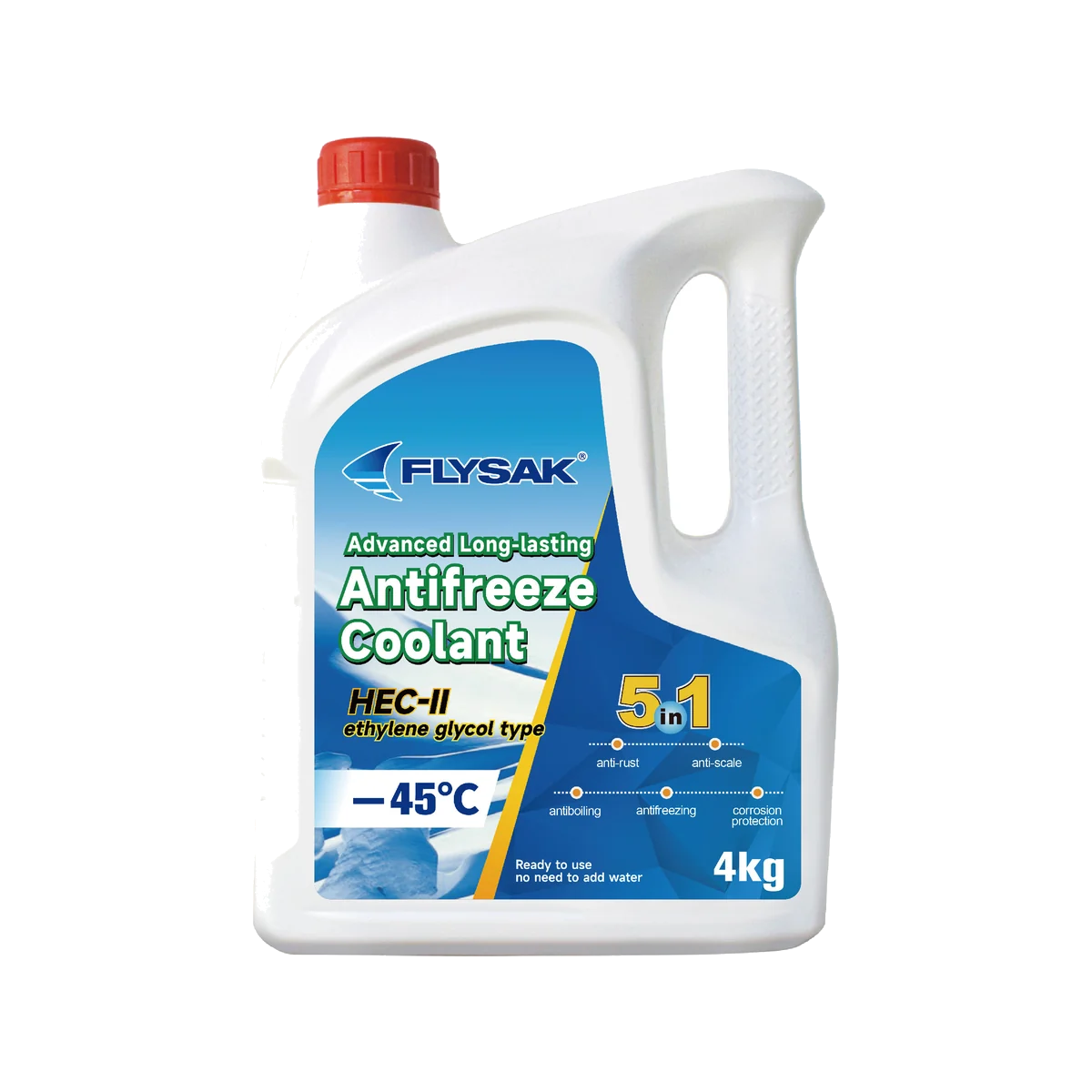
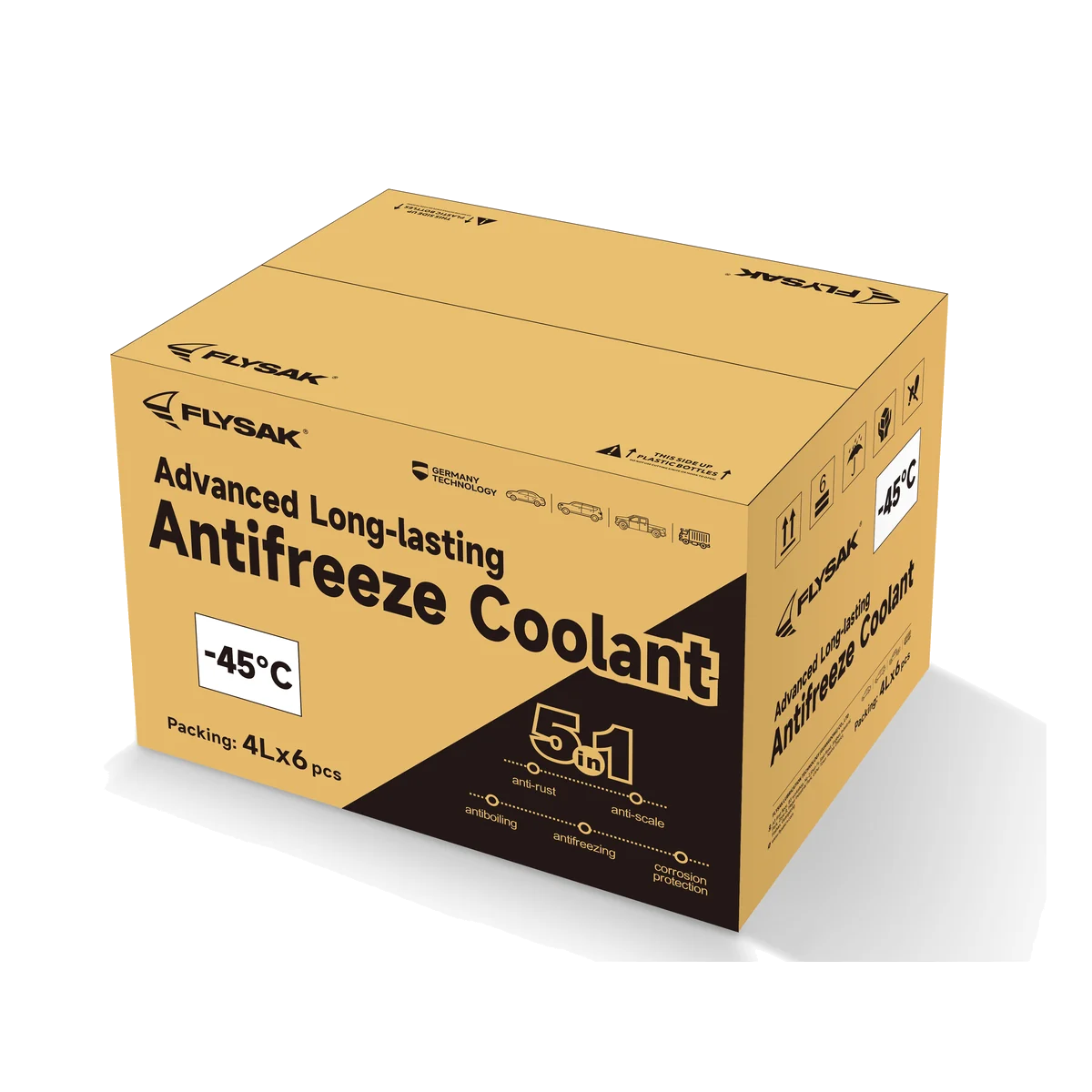
FLYSAK's public catalogue currently shows two ready-to-use passenger-car coolant profiles: AC-001, labelled for minus 25 degrees Celsius, and AC-003, a long-life organic-acid profile labelled for minus 45 degrees Celsius. These are useful catalogue starting points, not a claim that either has passed every test discussed below. Request current reports and the written product specification for the exact product proposed.
- Compare the published FLYSAK coolant range — Check the available ready-to-use product profiles before requesting evidence.
- Review prediluted AC-001 — See the current product description and packaging context.
Know what each corrosion method can answer
A test name is not a quality verdict. ASTM D1384-24 uses metal specimens in controlled glassware conditions. ASTM describes it as a way to screen out clearly harmful formulations before more evaluation, and expressly cautions that its result cannot stand alone as proof of satisfactory inhibition in service. A buyer should therefore ask what additional evidence supports the proposed claim, especially if the label promises extended service.
ASTM D2570-26 uses circulation and automotive cooling-system components to approach service conditions more closely than glassware testing. Even that method does not conclusively predict service life. ASTM D4340-26 focuses on cast aluminum under heat-rejecting conditions, a different question from a simple immersion coupon. ASTM D2809-21 evaluates cavitation corrosion and erosion-corrosion in aluminum automotive water pumps. The methods are complementary; they should not be presented as interchangeable certificates.
Ask the supplier which specification or vehicle-maker requirement makes a particular method relevant to your proposed product. A report may use an earlier edition because it predates a revision. Record the edition and decide with a competent technical reviewer whether that report is acceptable for the current claim instead of silently calling it a current-method result.
| Method | Question addressed | Buyer check | Interpretation limit |
|---|---|---|---|
| ASTM D1384-24 | How the coolant affects metal specimens in controlled glassware screening | Exact sample, metal-by-metal results and agreed acceptance basis | Screening alone does not establish service performance |
| ASTM D2570-26 | How circulating coolant affects specimens and cooling-system components | Component set, test conditions, results and relevance to the claim | Improved simulation is not a service-life guarantee |
| ASTM D4340-26 | How coolant protects cast aluminum under heat-rejecting conditions | Aluminum result and the specification used to judge it | A focused screen does not cover every system material |
| ASTM D2809-21 | Whether the coolant contributes to aluminum-pump cavitation damage | Pump-test result and the agreed evaluation rule | A bench rating is not a mileage promise |
Read the report, not only the supplier's summary
A usable report identifies the issuing laboratory, its report number, test dates, customer or submitting party, sample description, method edition, procedure or dilution, measured results and the person authorising the document. If the lab used a modified method, the deviation should be visible. A slide that says 'passed corrosion test' omits the facts needed to compare suppliers.
Inspect the individual metal or component observations where the method provides them. A single overall pass can hide which material approached its acceptance boundary. Ask for the governing specification and its approved revision, then compare the reported result with that written criterion. Do not borrow a limit from a competing product or assume a lower mass-change number always means better field performance; the method and acceptance rule must be read together.
If a third-party laboratory is important for a new programme, agree that before sampling. Ask who selected the sample, whether it was taken from pilot blend or production material, how it was sealed and who retained a counterpart. A genuine laboratory report for an untraceable sample may still have little value for release of a container shipment.
Separate formula qualification from batch release
A corrosion programme normally qualifies a formulation or supports a defined claim. It is different from the routine checks used to release each production batch. Ask which properties are checked on every blend, which are verified periodically and which depend on a change-control review. The supplier should be able to show a written link between the qualified formulation, the production recipe, the finished-product specification and the batch code.
For a ready-to-use coolant, concentration and water control deserve attention because the liquid is sold as the final service mixture. Request the current TDS, SDS, finished-product specification and a representative batch COA. Review concentration or freeze-point checks, pH and any other agreed identity indicators alongside the corrosion qualification file; none of those quick checks, by itself, repeats a full corrosion test.
Define what change requires a technical recheck: inhibitor package, glycol source or type, dilution water, manufacturing location, blend process or packaging material when relevant. The answer can be risk-based, but it should be written before the first order. A supplier's unchanged product name does not prove that the evidence still covers a revised formulation.
- Compare premixed coolant with concentrate — Set the commercial form and dilution responsibilities first.
- Read the coolant supplier checklist — Place corrosion evidence within the wider supplier review.
Write acceptance and traceability into the purchase file
The purchase file should list the exact SKU and formulation code, coolant form, target vehicles or application class, claim wording, named test methods, accepted report editions and any destination-market document requirements. Attach the report list and assign an owner to approve substitutions. This makes two quotes comparable without assuming both suppliers mean the same thing by 'long life' or 'ASTM tested'.
Before artwork approval, connect every printed standard or service statement to the evidence for that exact SKU. Avoid turning a test-method reference into an unsupported 'ASTM certified' badge; a method describes how to test, while a product claim needs its own substantiation. Confirm any manufacturer approval through current manufacturer evidence rather than a generic compatibility chart.
The finished sample should carry a legible batch code that connects to production and shipping records. If multiple batches enter one shipment, the packing list should allow them to be separated. Agree how complaints will be handled: retained sample, batch COA, production record, laboratory file and any field sample should be retrievable without rebuilding the history from email threads.
Send an RFQ that produces comparable answers
Tell prospective suppliers the destination market, main vehicle groups, vehicle-maker coolant requirements, desired ready-to-use or concentrate format, claimed protection level, pack sizes, label languages and estimated SKU mix. State whether you need a current corrosion qualification file, an independent lab report, a production sample or a batch COA before the first shipment.
Ask each supplier to return an evidence matrix: product code, formulation reference, method and edition, test report number and date, specification or acceptance rule, batch-control plan and what will trigger reapproval. Mark any missing item as an open question rather than converting it into a pass or fail by assumption. Price, MOQ and lead time can then be compared against the same technical and packaging scope in the written quotation.
FLYSAK can review a coolant brief against its current ready-to-use catalogue and private-label process. The exact product, available evidence, artwork, package and commercial terms should be reconfirmed for the project before an order is placed.
- Review FLYSAK private-label options — Coordinate product, evidence and packaging approval.
- Send your coolant sourcing brief — Share application, format, documents and order mix for review.
Frequently asked questions
Is an ASTM D1384 pass enough to approve a coolant supplier?
No. D1384 is a controlled glassware screening test. Review the exact report, acceptance basis and formulation identity, then ask which additional evidence supports the intended product and service claim.
What is the difference between ASTM D1384 and D2570?
D1384 evaluates coolant effects on metal specimens in glassware. D2570 uses circulating coolant and cooling-system components to approach service conditions more closely. Neither method alone guarantees long-term field performance.
Do all coolant batches need a full corrosion test?
There is no universal rule that every batch must repeat every qualification test. Agree the per-batch release checks, periodic tests and change-control triggers for the exact formulation and purchase specification.
Can a report for coolant concentrate support a ready-to-use bottle?
Only when the tested dilution and formulation can be traced to the proposed ready-to-use product and the agreed claim. Ask the supplier to document that connection and the controls on production dilution water.
Does 'ASTM tested' mean ASTM certified?
No. A test-method reference identifies a procedure. Request the actual report and the product specification used to judge it; do not infer that ASTM certified the finished coolant.
Can coolant colour show corrosion protection or compatibility?
No. Dye colour does not establish inhibitor chemistry, corrosion performance or suitability for a particular vehicle. Use the current vehicle requirement and product evidence.
What should an importer ask for before printing a long-life claim?
Ask for the exact claim basis, formulation-specific qualification reports, relevant OEM or specification evidence, approved label wording and a change-control plan. A single bench-test result is not a service-life promise.
Sources
Technical and regulatory references reviewed for this article:
- ASTM D3306-21 — Glycol Base Engine Coolant for Automobile and Light-Duty Service — Reviewed the public scope and its distinction between concentrate and prediluted light-duty coolants.
- ASTM D1384-24 — Corrosion Test for Engine Coolants in Glassware — Reviewed the public description of metal-specimen screening and its stated limits as service evidence.
- ASTM D2570-26 — Simulated Service Corrosion Testing of Engine Coolants — Reviewed the public description of circulating-coolant testing and its limits for predicting service life.
- ASTM D4340-26 — Corrosion of Cast Aluminum Under Heat-Rejecting Conditions — Reviewed the public scope for screening aluminum corrosion under heat-transfer conditions.
- ASTM D2809-21 — Cavitation Corrosion and Erosion-Corrosion of Aluminum Pumps — Reviewed the public scope of aluminum-pump cavitation evaluation and its limits as a mileage predictor.