
Table of contents
- Start with the coolant specification, then choose the product form
- Compare premixed coolant and concentrate as two operating models
- For concentrate, water quality becomes a product-quality input
- Verify finished protection instead of relying on a mixing assumption
- Compare landed economics using finished usable litres
- Approve packaging and artwork for the actual product form
- Connect the format decision to safety, storage and traceability
- Send an RFQ that exposes the real operating choice
- Frequently asked questions
- Sources
Start with the coolant specification, then choose the product form
Premixed and concentrated products describe how the coolant is supplied, not whether it is correct for a particular vehicle. The buyer must first identify the coolant chemistry and performance requirement from the current owner manual, workshop information or OEM specification. Only then should the team decide whether the approved fluid will be purchased as a predilute or as a concentrate for controlled dilution.
ASTM D3306-21 covers glycol-base engine coolants for automobiles and light-duty service and recognises both concentrates and prediluted coolants. That does not make every coolant interchangeable. Inhibitor technology, OEM requirements, service interval, base glycol, concentration and application limits still need to match the intended vehicle population.
Build a vehicle-and-market worksheet before requesting prices. Record the important makes, models and years, the specified coolant or approval, climate requirement, current workshop practice and whether the destination market can reliably control dilution. Ask the supplier to identify applications that remain unconfirmed instead of offering a colour-based or universal fitment statement.
- Use the antifreeze coolant supplier checklist — Review chemistry, application evidence, testing, packaging and change control before comparing suppliers.
Compare premixed coolant and concentrate as two operating models
Premix transfers the water selection and dilution step to the manufacturing process. The importer receives a finished fluid with a stated protection level and can sell or use it without adding water. That simplicity can be valuable in retail, workshop and fleet channels where many people handle the product and dilution discipline is difficult to supervise.
Concentrate carries more active coolant per shipped litre, but the local organisation becomes responsible for water quality, measuring, mixing, identification and verification of the finished solution. It may suit controlled central filling or service operations, yet it can create inconsistent results when different workshops use different water sources or ratios.
| Decision point | Premixed coolant | Concentrate |
|---|---|---|
| Installation step | Use as supplied when the product and vehicle requirement match | Dilute to the approved ratio before use |
| Water responsibility | Managed in the finished-product manufacturing process | Buyer or workshop must control the water source |
| Field consistency | Fewer measuring and mixing variables | Depends on equipment, procedure and operator discipline |
| Freight comparison | Ships the finished mixture | Ships less water but needs local dilution |
| Commercial comparison | Compare cost per usable litre and pack | Include water treatment, mixing, testing and labour |
| Best fit | Retail and dispersed service channels needing ready-to-use control | Controlled facilities able to document dilution and release |
For concentrate, water quality becomes a product-quality input
The water used to dilute concentrate is part of the finished coolant. Ford's current service information directs users to dilute approved concentrate with deionised or distilled water when prediluted coolant is unavailable, and warns that unsuitable water can contribute to deposits, corrosion and restricted cooling passages. A Stellantis technical bulletin likewise links tap or well water minerals with water-pump seal problems and recommends distilled or suitably purified water for dilution.
An importer planning to sell concentrate should therefore define acceptable water quality, the approved source, storage vessel, mixing equipment and cleaning procedure. If dilution happens at many independent workshops, a sentence on the label may not provide enough control. Training, measuring equipment and a verification method become part of the product programme.
Ask the supplier for a dilution instruction that identifies the applicable coolant requirement, water type, ratio or protection target, mixing sequence and verification method. Do not copy one OEM's ratio to every vehicle. The vehicle manufacturer and product documentation remain the governing sources for the exact application.
| Control | Evidence or procedure | Buyer approval question |
|---|---|---|
| Water source | Defined distilled, deionised or approved purified water | Can every dilution location use the same controlled source? |
| Mixing ratio | Vehicle- and product-specific written instruction | Is the ratio valid for the target application and climate? |
| Measuring equipment | Calibrated volume or mass control | Can operators reproduce the target concentration? |
| Finished verification | Appropriate concentration or freeze-point test | Is each prepared batch checked and recorded? |
| Identification | Mixing record and labelled finished container | Can the prepared fluid be traced and kept separate? |
Verify finished protection instead of relying on a mixing assumption
A written dilution ratio is an instruction; it is not proof that the finished fluid was prepared correctly. ASTM D1177 is the laboratory method used to determine the freezing point of an aqueous engine-coolant solution. It also notes that freezing point can indicate approximate glycol content when the glycol type is known. Procurement teams can use that distinction to separate formulation evidence from routine field checks.
For premix, request representative freeze-point information and the supplier's routine batch-release controls for the finished product. For locally prepared coolant, define how the mixed batch will be checked before filling vehicles or smaller packages. A refractometer may support an operational concentration check when it is suitable for the glycol and product system, but the method, calibration and interpretation should be agreed rather than improvised.
Do not judge protection from colour. Dye helps with product identification, but it does not prove concentration, inhibitor chemistry or vehicle compatibility. Product name, batch code, written specification and test record should carry the decision.
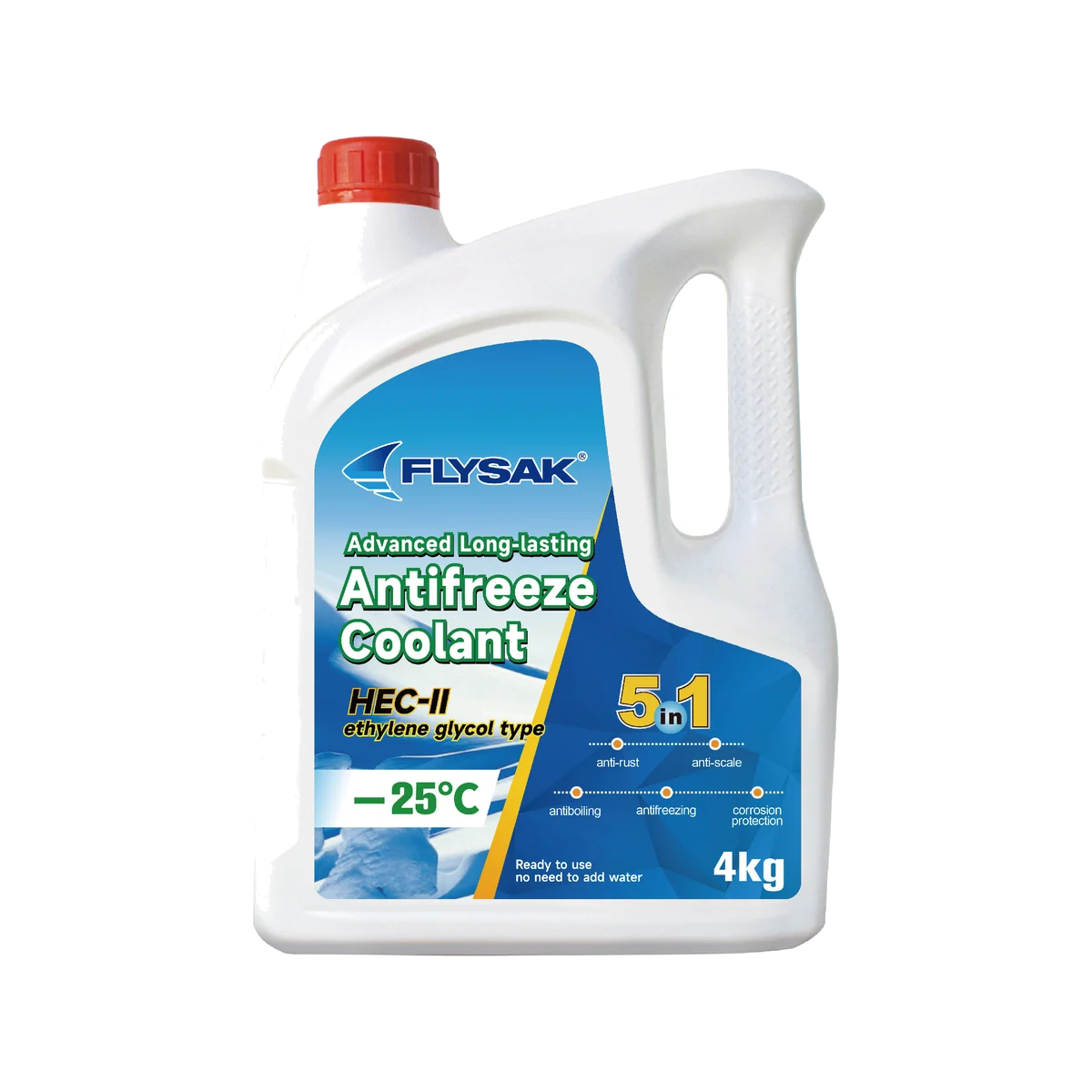
- Review the FLYSAK ready-mix −25°C coolant — See the current product form, protection statement, 4L pack and representative properties.
Compare landed economics using finished usable litres
Concentrate may appear cheaper or more freight-efficient because the buyer is not shipping all of the final water. Premix may appear more expensive per shipped litre because each litre is already finished. Neither comparison is useful until both offers are converted to the same approved final concentration and packaging scope.
For concentrate, include controlled water, treatment or purchase cost, mixing labour, equipment, verification, losses, secondary containers, labels and local quality responsibility. For premix, include its finished pack, carton, pallet utilisation and delivered cost. Then compare the usable litres that can be sold or installed under the same vehicle and protection requirement.
Keep this as a quotation model rather than a universal formula. Ratios, pack sizes, freight rates, duties and local operating costs vary. Ask both suppliers to state the product form and concentration basis clearly so procurement does not compare one litre of finished coolant with one litre of concentrate as if they were equivalent goods.
| Cost line | Premix review | Concentrate review |
|---|---|---|
| Product volume | Finished usable litres | Finished litres after approved dilution |
| Packaging | Bottle, cap, label and carton for finished product | Concentrate pack plus any local finished containers |
| Water and processing | Included in the supplied finished fluid | Approved water, mixing, cleaning and labour |
| Quality control | Supplier finished-batch evidence | Concentrate evidence plus local mixture checks |
| Risk allowance | Damage, leakage and field handling | Add dilution errors, contamination and traceability risk |
Approve packaging and artwork for the actual product form
The front label should make premix or concentrate unmistakable. A ready-to-use product should state the supplied protection basis and whether further dilution is prohibited. A concentrate needs a clear, application-appropriate dilution instruction and should not present the protection level of one prepared mixture as though it were the condition inside the bottle.
Review the complete commercial pack: bottle resin, cap and induction seal, label stock, print durability, batch code, carton, pallet pattern and transport handling. Concentrate and premix can differ in density and handling, so approve production-representative samples rather than transferring artwork and packaging assumptions from another fluid.
MOQ and mixed-container conditions depend on the confirmed formula, bottle, cap, label, carton and SKU mix. Request them only after the product form and artwork scope are defined. This prevents procurement from negotiating a packaging quantity before the technical route is stable.
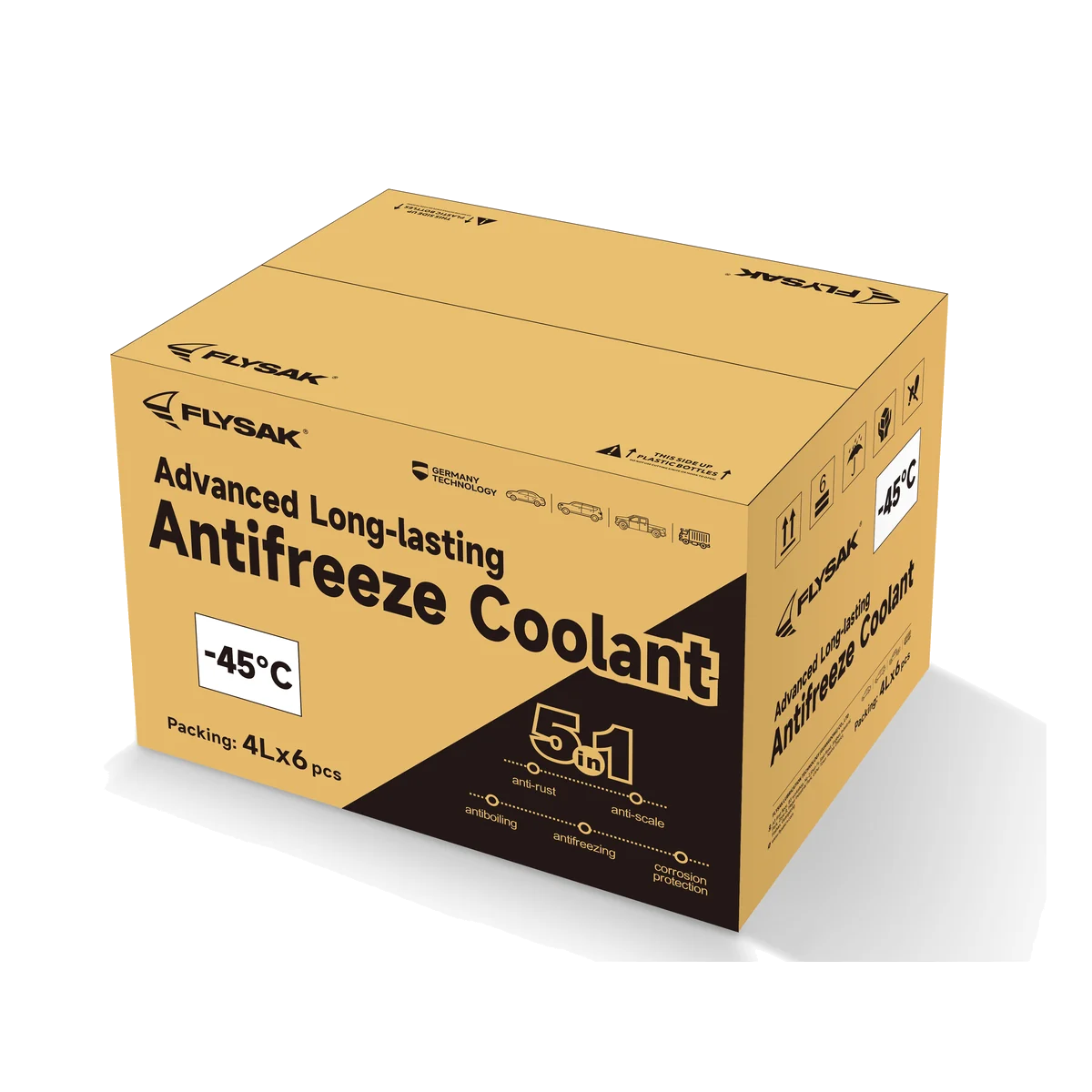
- Review the FLYSAK long-life −45°C coolant — Compare the current ready-to-use product profile and 4L × 6 carton reference.
- Review the private-label workflow — Organise product, sample, packaging, artwork and document decisions before ordering.
Connect the format decision to safety, storage and traceability
NIOSH identifies ingestion and skin or eye contact among the exposure routes for ethylene glycol and advises preventing skin and eye contact. Importers should obtain the current SDS for the exact product, review destination-market transport and label requirements, and train handlers on spills, personal protection, first aid and disposal.
Keep coolant in clearly identified, closed containers and separate it from food, drink and unrelated automotive fluids. For concentrate, control both the original batch and every locally prepared batch. The mixing record should identify the concentrate lot, water source, quantities, operator, test result, date and destination. Premix still needs a legible supplier batch code and receiving inspection.
Agree change control before the first order. Changes in glycol base, inhibitor package, dye, concentration, stated protection, bottle, cap, label, test method or product status may require fresh documents, samples or artwork approval.
Send an RFQ that exposes the real operating choice
A useful coolant RFQ names the destination countries, important vehicles, OEM or performance requirements, climate range, product form, protection target, pack sizes, label languages, sales channel and first-order mix. If concentrate is being considered, add the planned water source, dilution location, equipment and verification process.
Ask the supplier to return a product-to-application matrix, current TDS and SDS, performance or approval evidence, representative freeze-point data, sample COA, finished-pack samples, batch-code plan and change-control terms. Require unsupported applications to be marked clearly. Compare commercial terms only after the same finished-fluid basis has been established.
FLYSAK's current public coolant catalogue contains two ready-to-use 4L products positioned around −25°C and −45°C protection. Importers should confirm the current documents, vehicle compatibility, pack availability and private-label scope for the exact proposal. If your programme is evaluating a concentrate format, state that requirement separately so availability and evidence can be confirmed rather than assumed.
- Compare the current FLYSAK coolant range — Review the two published ready-to-use coolant profiles and packaging references.
- Send your coolant sourcing brief — Share the vehicle requirements, protection target, product form, pack sizes and order plan.
Frequently asked questions
Is premixed coolant the same as ready-to-use coolant?
Usually these terms describe a coolant supplied at its finished water-and-glycol concentration, but the label and TDS should confirm the exact protection level and whether further dilution is prohibited. Do not assume every premix uses the same concentration or vehicle specification.
Is coolant concentrate cheaper for an importer?
It can reduce the amount of water shipped, but the real comparison must include approved water, mixing, labour, equipment, testing, local packaging, losses and risk. Compare both quotations by finished usable litres at the same required concentration and application.
Can tap water be mixed with antifreeze concentrate?
Do not assume so. Current OEM service information commonly specifies distilled or deionised water for approved concentrate and warns that unsuitable water can contribute to deposits, corrosion or cooling-system problems. Follow the exact vehicle and product instructions.
Can premixed coolant be diluted for a warmer climate?
Not unless the vehicle manufacturer and product supplier explicitly permit it. Diluting a ready-to-use product changes its freeze, boil and corrosion-protection balance. Treat the supplied concentration as a controlled product specification.
How should an importer verify the freeze protection of coolant?
Request the supplier's written specification, representative freeze-point evidence and routine batch controls. ASTM D1177 is the laboratory method for freezing point of aqueous engine coolants. For operational checks, agree a suitable instrument, method and acceptance limits for the exact glycol system.
Can coolant colour identify whether it is concentrate or premix?
No. Colour is not a universal indicator of concentration, chemistry or compatibility. Use the product name, label instructions, TDS, batch code and vehicle requirement rather than choosing or mixing coolant by dye colour.
What should be included in a private-label coolant RFQ?
Include destination markets, target vehicles, required coolant or OEM specifications, climate and protection target, premix or concentrate format, pack sizes, label languages, water-control plan where relevant, first-order mix and required technical documents.
Sources
Technical and regulatory references reviewed for this article:
- ASTM D3306-21 - Glycol Base Engine Coolant for Automobile and Light-Duty Service — Reviewed for the recognised concentrate and prediluted glycol-coolant categories and the light-duty application scope.
- ASTM D1177-22(2026) - Freezing Point of Aqueous Engine Coolants — Reviewed for the laboratory determination of coolant freezing point and its relationship to approximate glycol content when glycol type is known.
- Ford Owner Manual - Checking the Coolant — Reviewed for current OEM guidance on prediluted coolant, approved concentrate, deionised or distilled water, mixing limits and hot-system safety.
- Stellantis TSB 07-007-23 - Water Quality When Mixed With Engine Coolant — Reviewed for the effect of dilution-water quality and the recommendation to use prediluted coolant or approved concentrate with distilled or suitably purified water.
- NIOSH Pocket Guide - Ethylene Glycol — Reviewed for ethylene-glycol exposure routes, symptoms, personal protection and first-aid context.