
Write the market brief before choosing a coolant
A supplier cannot select the right range from the destination country alone. Importers should describe the lowest temperatures encountered in the sales territory, the passenger-car and light-vehicle population, common service intervals, workshop practices and the price segment of the intended brand. A national market may need more than one freeze-protection level when coastal, tropical and high-altitude regions are served through the same distributor network.
The brief should also explain how the product will be sold. A ready-to-use coolant is convenient for retail and workshop drain-and-fill service because the water quality and dilution ratio are already controlled. A concentrate may suit other supply models, but it creates additional responsibility for mixing water, concentration instructions and field accuracy. Quotations should identify the form clearly rather than using antifreeze and coolant as interchangeable commercial labels.
- Destination markets, climate zones and the required freeze-protection range.
- Main vehicle origins, cooling-system requirements and workshop service habits.
- Ready-to-use or concentrate format, bottle size and annual volume by SKU.
- Target brand position, sales channel, label language and expected first shipment.
Confirm the coolant type, concentration and application
A coolant product should be described by more than its colour and freezing point. The buyer needs to know the base fluid, whether it is concentrate or prediluted, the inhibitor technology, the intended vehicle class and the application limits. Those details determine how the product should be labelled, serviced and positioned in the market.
For a ready-to-use product, the supplier should state that no additional water is required and provide the representative glycol concentration and freeze point in the current technical data. Diluting a finished premix changes the protection level and the inhibitor concentration. For a concentrate, the label and technical documents should give an approved mixing range and appropriate water-quality guidance.
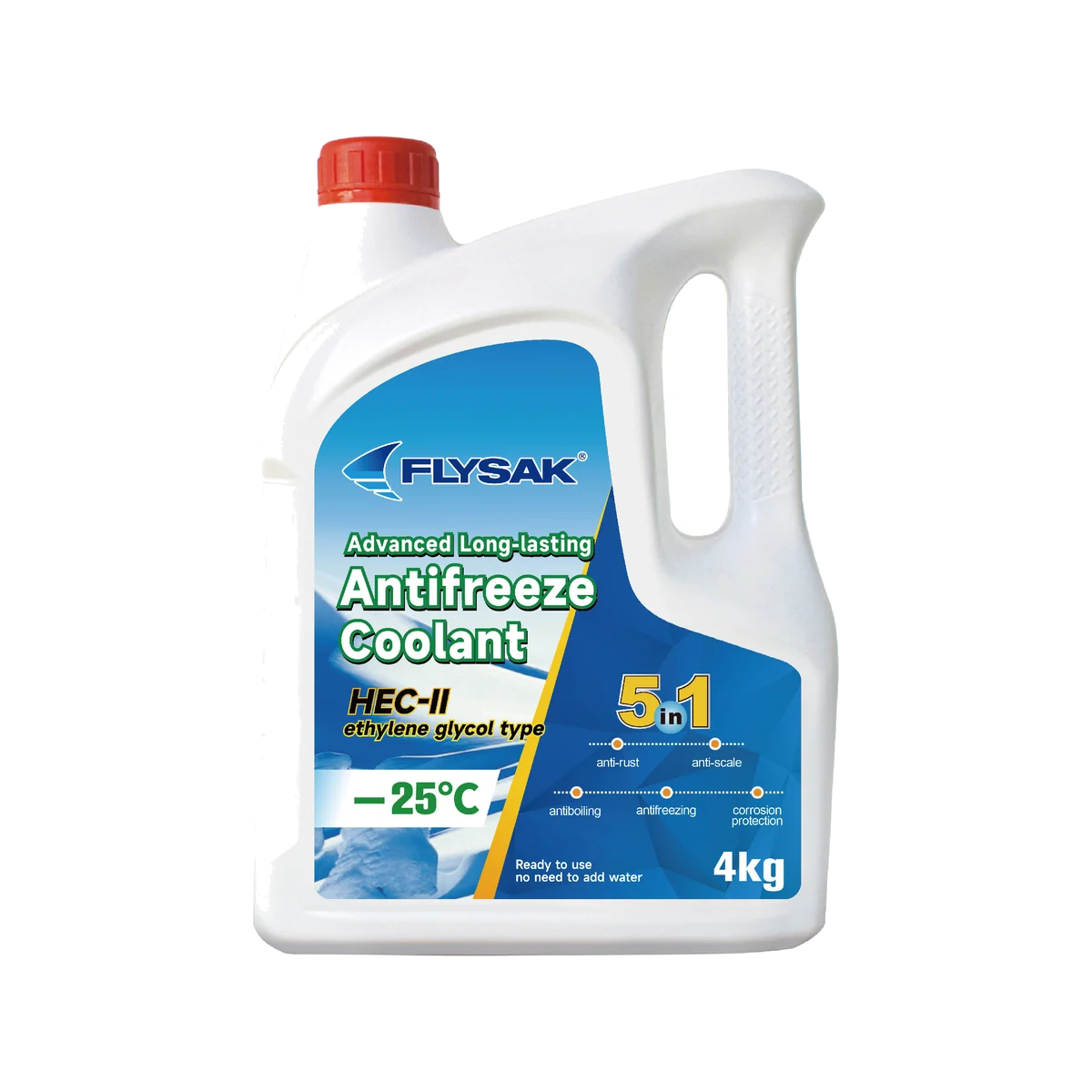
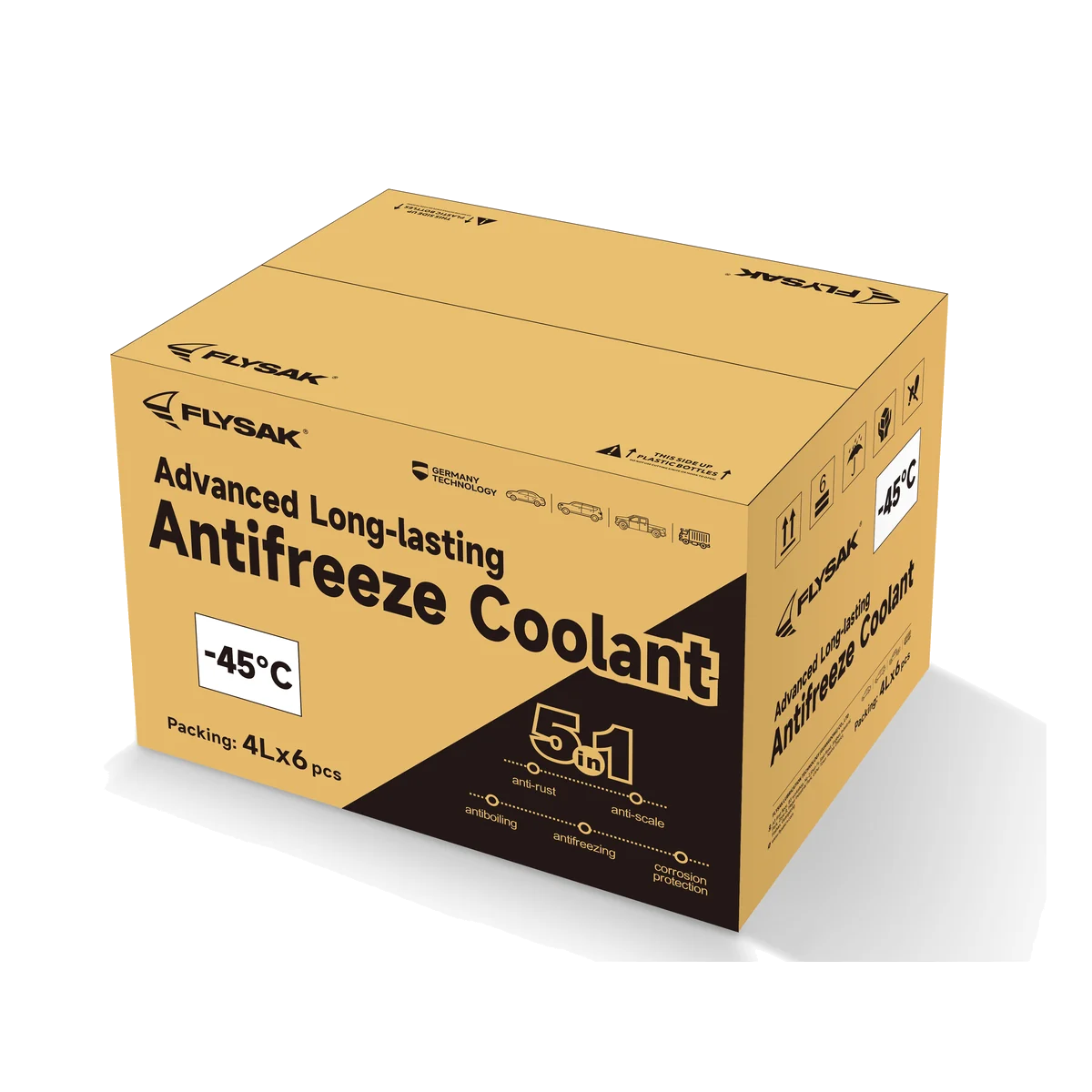
FLYSAK currently lists two ready-to-use passenger-car coolant profiles: a −25°C product for markets with moderate freeze-protection demand and a long-life −45°C organic-acid inhibitor profile for colder service conditions. The actual choice still has to follow the vehicle requirement and the climate of the destination market.
Do not use colour as the compatibility rule
Coolant colour helps a brand identify products, but it is not a universal technical standard. Similar colours can represent different inhibitor systems, and different colours can be used for products serving comparable applications. A catalogue, label or sales team should therefore avoid fitment advice based only on red, green, blue or another dye.
Ask the supplier to identify the coolant technology and provide a reviewed application statement. When the existing coolant is unknown or a different chemistry is being introduced, the service procedure should follow the vehicle manufacturer's guidance. Mixing incompatible products may reduce the intended corrosion protection or create deposits, so a drain, flush and refill may be required before changing chemistry.
For importer training, a short selection rule is more useful than an oversized compatibility promise: confirm the vehicle requirement, choose the approved coolant chemistry and concentration, and do not mix products unless compatibility is documented.
Check what each standard claim actually covers
Standards help organise supplier comparisons, but only when the version, product type and claim basis are clear. ASTM D3306-21 is the active ASTM specification for glycol-base engine coolant used in automobiles and light-duty service. An importer should still ask whether the proposed product was tested as a concentrate or predilute and which current reports support the stated compliance.
A list of standard numbers on a label is not the same as an approval file. Request the test report or technical evidence available for the exact formulation, confirm the tested concentration, and check that the brand artwork does not turn a performance reference into an unsupported manufacturer approval. If the destination country has local registration, language, chemical or packaging requirements, review those separately with a qualified local adviser before printing.
- Review the active ASTM coolant specifications — ASTM lists D3306-21 under the current work of its engine-coolant specifications subcommittee.
Request a complete technical document pack
The Technical Data Sheet should identify the coolant form, base chemistry, application, representative properties and claim framework. The Safety Data Sheet supports transport, workplace handling and destination-market review. For a private-label programme, both documents should use an agreed product name or code so that the buyer can trace them to the approved label and purchase specification.
Representative properties commonly reviewed for a prediluted coolant include density, glycol content, freezing point, boiling point, pH, reserve alkalinity and limits on contaminants such as chloride. Corrosion performance matters as much as the freeze number because a cooling system contains aluminium, iron, steel, copper alloys, seals and hoses. Ask which tests are used to evaluate those materials and what production checks are performed on every batch.
The Certificate of Analysis should report the agreed release tests for the shipped batch. It should not be confused with a full development test programme. The purchasing specification needs to define which values are controlled batch by batch, which are verified periodically and which are supported by formulation qualification data.
- Current TDS and SDS linked to the exact product code and concentration.
- Available performance or corrosion-test evidence for the claimed standard profile.
- A sample batch COA showing the agreed routine release tests and limits.
- Written confirmation of product technology, application limits and approved label claims.
Evaluate the finished pack as carefully as the fluid
A technically sound coolant can still create losses if the bottle leaks, the label lifts in a damp workshop or the carton fails during inland transport. Request production-representative filled samples with the proposed bottle, cap, liner or induction seal, label material, batch code and carton. Check the pack after storage in different orientations and after normal handling rather than reviewing only an empty bottle mock-up.
Coolant labels should make the product form and protection level easy to understand. Ready-to-use wording, do-not-dilute instructions where applicable, application limits, safety information, net contents, manufacturer or importer details and batch traceability should be reviewed before artwork approval. The importer remains responsible for confirming destination-market label rules.
Container planning also matters because coolant is a relatively heavy, water-containing product. Compare units per carton, pallet pattern, gross weight, mixed-SKU loading and protection against cap or carton damage. A slightly different carton arrangement can affect landed cost and warehouse handling more than a small ex-factory price difference.
Audit water quality, batch control and traceability
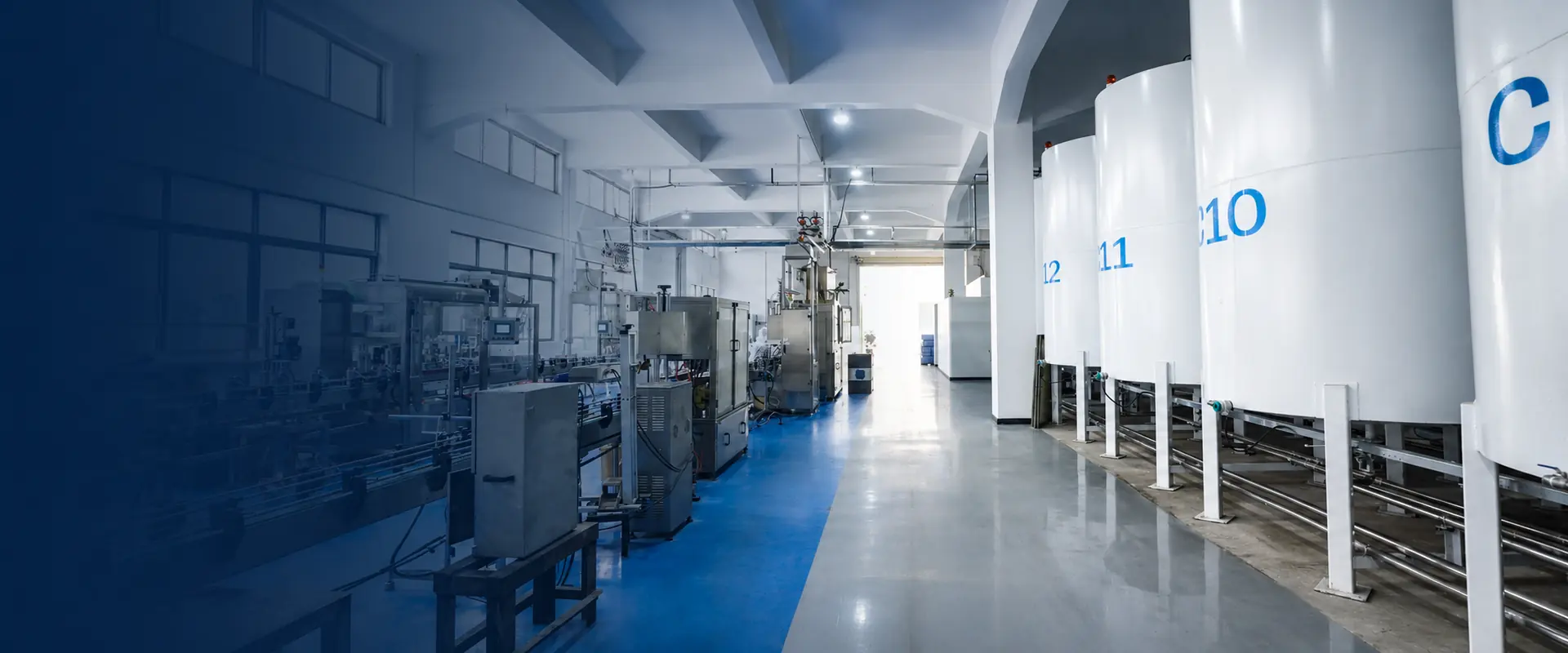
For a prediluted coolant, the water is part of the formulation. Ask how process water is treated and monitored, how glycol and inhibitor components are identified, and how the blend is protected from contamination. The manufacturing record should connect raw-material lots, blend quantities, in-process results, filling records, packaging lots and the finished batch code.
The supplier should explain who reviews the test results and releases the batch. Retained samples and stable records make it possible to compare a complaint sample with the original production. A useful complaint process should identify the product, batch, vehicle, service history, other fluids added and the evidence needed for investigation rather than assuming every cooling-system problem has the same cause.
Change control should be agreed before the first order. Formulation, inhibitor source, dye, bottle resin, cap, label material and test-method changes can all affect registration, artwork or market communication. Require advance written notice and define which changes need a new sample, document review or buyer approval.
Compare commercial value on the same basis
Ask each supplier to quote the same product form, pack size, carton quantity, documentation scope, order mix and trade term. A low price for a concentrate cannot be compared directly with a ready-to-use coolant, and a price without bottles, labels, cartons or testing does not represent the finished private-label cost.
Include artwork and printing charges, minimum quantities by label or formulation, sample costs, mixed-container flexibility, lead time, payment terms and loading efficiency. Also price the cost of uncertainty: unclear chemistry, unsupported claims, weak packaging or missing batch records can create returns and distributor disputes that exceed the apparent saving per bottle.
The stronger supplier is the one that can explain the product limits, document the agreed quality and repeat the approved pack—not the one that promises one coolant for every vehicle and climate.
Send an RFQ that produces a useful coolant proposal
A good request for quotation should contain the target countries, climate range, vehicle mix, coolant technologies, ready-to-use or concentrate format, freeze-protection levels, packaging, label language and estimated volume. Include your existing product list and current problems if you are switching suppliers. This allows the technical team to identify gaps and recommend a manageable starting range.
FLYSAK's current passenger-car coolant range provides two ready-to-use starting points in 4L packaging. Importers can review the −25°C and long-life −45°C profiles, then request the current TDS, SDS, packaging details, sample plan and batch-control proposal for the intended market.
- Compare the FLYSAK coolant range — Review the current passenger-car coolant products and pack information.
- Review the −25°C ready-to-use coolant — See its application notes, representative properties and selection guidance.
- Review the long-life −45°C coolant — Compare the colder-climate product profile and carton option.
- See FLYSAK private-label services — Review the programme for importers building or changing an automotive-fluid brand.
- Send your coolant sourcing brief — Share your market, climate, pack size and first-order plan for review.
Frequently asked questions
What information should an importer send to an antifreeze coolant supplier?
Send the destination markets, climate range, important vehicle groups, required coolant technology, ready-to-use or concentrate format, freeze-protection levels, pack sizes, label language, first-order mix and annual estimate. This produces a more useful proposal than asking only for the cheapest coolant.
Is coolant colour enough to confirm compatibility?
No. Colour is not a universal technical standard. Confirm the vehicle requirement, coolant technology, concentration and documented application rather than matching products by dye colour alone.
Should ready-to-use coolant be diluted with water?
A product labelled ready to use is supplied at its intended concentration and normally should not be diluted. Adding water changes freeze protection and inhibitor concentration. Always follow the current product label, TDS and vehicle service instructions.
Which documents should be checked before importing coolant?
Review the current TDS, SDS, available standard or corrosion-test evidence, approved product specification, application statement, sample COA and final label. Local chemical, language, transport and packaging requirements should be checked separately in the destination market.
How should two coolant supplier quotations be compared?
Compare the same coolant form, concentration, protection level, pack, carton, documentation and trade term. Include minimum quantities, artwork costs, mixed-SKU flexibility, lead time, container loading, batch controls and change-management commitments—not only the price per litre.