

Table of contents
- Ask what the shelf-life statement actually covers
- Buy remaining selling time, not only fresh-looking packaging
- Make the batch code useful at receipt and during stock rotation
- Give warehouses and workshops the exact storage instructions
- Agree a hold-and-review route for aged or questionable stock
- Include shelf life in the private-label RFQ
- Frequently asked questions
- Sources
Ask what the shelf-life statement actually covers
A useful statement names the product or formulation, packaging format, date basis and required storage conditions. Ask whether the period starts at blending, filling or another recorded event. Confirm whether the supplier means a use-by date, a recommended review date or a period after which testing is required. Those terms should be explained in the purchase file rather than treated as interchangeable on a label.
Mobil's published lubricant guidance is an example of a manufacturer-specific policy: it ties its recommendation to original sealed containers stored properly, distinguishes storage life from service life and directs customers to seek guidance for stock at or beyond the stated period. It must not be used to assign a shelf life to a FLYSAK ATF or a private-label formulation. Request that product's own written basis.
Check the pack covered by the statement. A retail bottle and a larger container may have different closure and dispensing arrangements. If a quotation proposes a new bottle, seal or other packaging change, ask whether the storage recommendation still applies. A commercial product name alone does not resolve a difference in formulation or packaging identity.
| Purchase point | Written evidence | Decision to record |
|---|---|---|
| Product and pack | Formulation reference and approved finished-pack specification | Which SKU and package the statement covers |
| Date basis | Code key and recorded starting event | How to calculate age and remaining life |
| Storage conditions | Current product instructions and SDS | Conditions required throughout the supply chain |
| Delivery acceptance | Agreed minimum remaining life and delivery point | When to accept, hold or escalate a shipment |
| Opened or aged stock | Supplier review and retest policy | Who can release stock and what evidence is needed |
Buy remaining selling time, not only fresh-looking packaging
The order date is not the manufacturing date, and arrival at the port is not the end of the distribution chain. Work backwards from your sales plan. Allow for anticipated transit and clearance, receipt inspection, distributor replenishment and a sensible allowance for slow-moving applications. Use estimates as planning inputs, then ask for the actual batch information before shipment.
Write the minimum remaining life into the order at a defined point, such as the agreed warehouse receipt. Decide how delays will be handled and which documents establish the starting date. A requirement expressed only as 'fresh production' leaves both sides guessing. Avoid publishing a fixed remaining-life promise to your customers until the supplier has accepted it for the exact order.
Order mix matters too. A small-volume transmission application can carry more inventory risk than a fast-selling service fluid, even if both arrive from the same production run. Review stock by SKU and batch rather than relying on an average across the container. A smaller replenishment for a slow mover may be more useful than a low unit price attached to excess stock.
- Review the ATF supplier evaluation guide — Connect date and inventory requirements to the wider purchasing brief.
- Compare the FLYSAK transmission-fluid range — Plan demand separately for each product profile.
Make the batch code useful at receipt and during stock rotation
Before production, request the date-code key and a sample showing the final bottle and carton markings. Warehouse staff should be able to identify the product, batch and applicable date without interpreting a sales email. If cartons and bottles use different identifiers, obtain the cross-reference. Keep shipment records that allow each received quantity to be assigned to a batch.
On receipt, compare the goods with the packing list and approved code examples. Record unreadable markings, damaged closures, leaking containers and wet or crushed cartons. Photograph exceptions and keep affected stock apart while the supplier reviews them. A receipt inspection can reveal packaging and traceability problems; it does not substitute for a laboratory evaluation of the fluid.
Where stock has valid use-by dates, dispatch the earliest-expiring acceptable batch first. If only manufacturing dates are provided, obtain the supplier's rule before translating age into an expiry date. Keep returned packs separate until their identity, closure condition and storage history have been reviewed. Replacing a carton label must never conceal or restart a product date.
Give warehouses and workshops the exact storage instructions
An importer needs instructions that the warehouse and distributor can follow. Request the supplier's requirements for storage location, temperature conditions, container orientation, stacking and exposure to sunlight or moisture. Compare those requirements with the actual route and premises. Do not invent a universal temperature limit when the product documentation has not provided one.
For navigating an SDS, the U.S. OSHA Appendix D identifies Section 7 as handling and storage and Section 10 as stability and reactivity. These are useful places to look for precautions and incompatible conditions. This document structure is not a global compliance ruling or a shelf-life certificate; obtain current product documents appropriate to the destination market.
Opening a container changes the inventory question. Ask for the product-specific rules on dispensing equipment, resealing, contamination control and remaining use. ZF's currently linked LifeguardFluid 6 product sheet, for example, gives preparation instructions that differ by container size. That is a reason to obtain exact supplier instructions, not to apply ZF's procedure to every ATF. Do not prescribe shaking, stirring or filtering as a general remedy for questionable stock.
Agree a hold-and-review route for aged or questionable stock
When a date is exceeded, the seal is uncertain or storage history is missing, hold the affected batch for review rather than deciding from colour or price. Give the supplier the formulation and batch identity, date records, packaging condition and known storage events. Request a written disposition: release with stated evidence, further evaluation, return or another agreed action.
If testing is proposed, define who selects the sample, which laboratory is used, what properties are assessed and who approves the result. ASTM D445-26 describes a kinematic-viscosity measurement. Such a result may be one part of a review, but it is not a complete assessment of ATF friction performance or a certificate extending shelf life. The technical reviewer must decide whether the selected tests answer the concern.
Preserve the original dates and the review report even when stock is released after evaluation. Record any conditions and the authority for the decision. Do not overwrite a use-by date, merge old and new stock or describe a limited review as a fresh production batch. That record becomes important if a distributor later questions the goods.
Include shelf life in the private-label RFQ
Send the supplier your destination, product mix, forecast by SKU, pack sizes, warehouse conditions and expected delivery route. Ask for a product-specific shelf-life statement, date-code examples, minimum remaining-life proposal, current SDS, sample batch-release record and policy for opened or aged stock. Allocate responsibility for transport delays and receipt exceptions before the first shipment.
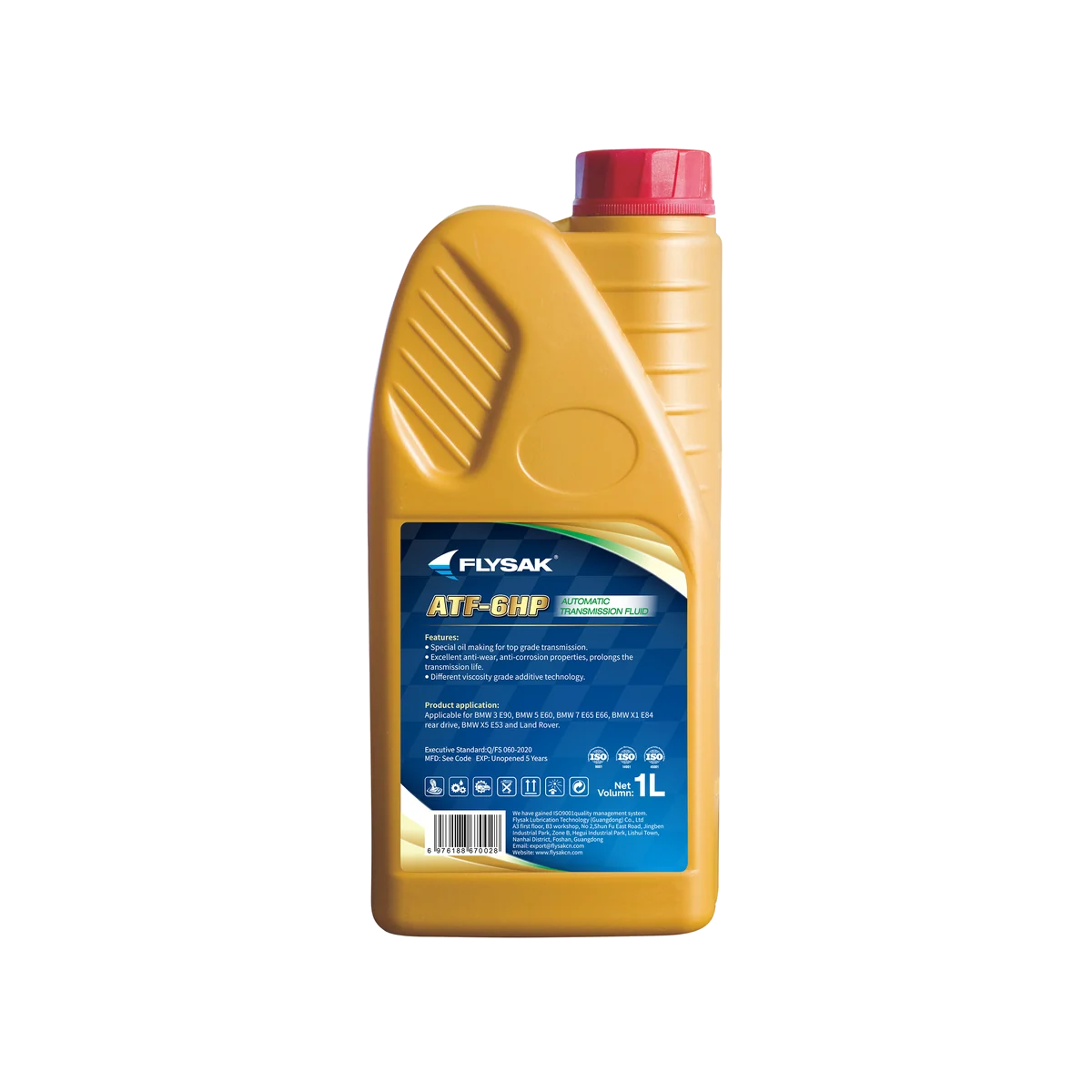
FLYSAK's catalogue includes transmission-fluid profiles such as AT-008 ATF 6HP. These product pages help identify a sourcing starting point, but they do not by themselves establish a shelf-life period or formal approval for a particular vehicle. Confirm the application, formulation, packaging and current storage statement for the exact proposal.
Compare quotations on the same remaining-life and document basis. Price, minimum order and delivery terms should come from the written offer. When the packaging artwork is approved, check that its storage wording and date fields agree with the technical file. A workable stock-control plan should travel with the product from supplier to importer, distributor and workshop.
- Review the AT-008 ATF 6HP product profile — Identify the proposed product before requesting a storage statement.
- Discuss FLYSAK private-label support — Coordinate formulation, artwork and purchasing documents.
- Send your ATF stock-planning brief — Share your product mix, delivery point and remaining-life requirements.
Frequently asked questions
What is the shelf life of unopened automatic transmission fluid?
Use the exact manufacturer's written statement for the formulation and pack, including the date basis and storage conditions. A general lubricant recommendation from another brand does not establish the period for your ATF.
Does ATF shelf life mean its transmission oil-change interval?
No. Packaged storage life and life in a working transmission are separate decisions. Follow the vehicle manufacturer's service requirements and exact fluid specification.
How much remaining shelf life should an importer request?
Define it from your transit, clearance and sales plan, then agree it at a named delivery point. There is no single commercial minimum suitable for every SKU or distribution channel.
Does opening a bottle restart its shelf life?
No. Keep the original batch and date identity and ask for product-specific instructions after opening. Do not assume that the sealed-pack recommendation remains valid under different handling conditions.
Can normal-looking ATF be released after its stated date?
Appearance alone is not release evidence. Hold the stock and obtain the supplier's written review or testing disposition before sale or use.
Is a viscosity retest enough to extend ATF shelf life?
Not by itself. The supplier's technical reviewer must define a relevant assessment and release basis. One physical-property measurement does not establish every transmission-fluid performance attribute.
Which shelf-life documents belong in an ATF RFQ?
Request the exact product and pack reference, written storage statement, date-code key, minimum remaining-life proposal, current SDS, batch-document example and policy for opened, returned or aged stock.
Sources
Technical and regulatory references reviewed for this article:
- Mobil — Shelf Life Recommendations for Lubricating Oils and Greases — Reviewed the manufacturer-specific sealed-container conditions, review guidance and distinction between shelf life and service life.
- ZF — LifeguardFluid 6 Product Data Sheet — Reviewed the currently linked sheet's container-size-specific preparation instructions; no ZF procedure is prescribed for FLYSAK products.
- OSHA — Appendix D, Safety Data Sheets — Verified the headings and information areas for SDS Sections 7 and 10; used only as a U.S. document-navigation reference.
- ASTM D445-26 — Kinematic Viscosity — Verified the active edition and public measurement scope to keep a viscosity retest distinct from a complete product assessment.