

Table of contents
- Start with the vehicle record, not the word hybrid
- Read the viscosity comparison without making a quality ranking
- Check the performance route and artwork separately
- Do not turn a limited alternative into routine stock coverage
- Build separate demand groups before deciding how many SKUs to buy
- Approve the actual product, pack and application wording
- Send an RFQ that makes unsupported applications visible
- Related procurement guides
- Frequently asked questions
- Sources
Start with the vehicle record, not the word hybrid
Ask the customer for the model year, engine or powertrain identification and sales market. Keep the manual edition or service-information reference with the enquiry. A vehicle family name without an engine and market can hide a different requirement; an imported used vehicle also needs its original specification identified rather than an assumption based on where it is now sold.
Create one application row for each confirmed requirement. Record the specified grade, performance standard and any manufacturer specification, then identify who checked the source. A workshop's usual practice can help describe demand, but it is not the missing technical approval. Mark incomplete rows unresolved before asking suppliers to quote them.
For a distributor, this record separates a real coverage gap from an attractive new label. If customers cannot identify the vehicles they intend to service, pause the fitment claim and collect the information. A purchasing deadline does not make a broad hybrid statement more precise.
| Record | What to retain | Purchasing decision |
|---|---|---|
| Vehicle identity | Model year, engine and relevant sales market | Separate different requirements |
| Routine service | Current specified grade and complete performance requirement | Approve the normal service product |
| Conditional alternative | Exact permission, use case and restrictions, if any | Do not expand its scope |
| Proposed product | Supplier code, formulation reference and matching evidence | Resolve the application before ordering |
| Review ownership | Source edition, reviewer and unresolved questions | Keep unsupported coverage on hold |
Read the viscosity comparison without making a quality ranking
SAE J300 classifies engine-oil viscosity behaviour; its public scope does not cover every other aspect of oil performance. The shared 0W designation does not make the complete 0W-16 and 0W-20 classifications identical. Neither designation, by itself, decides which finished product belongs in a particular engine.
In the buying worksheet, keep viscosity beside the required API, ILSAC or manufacturer specification, not in place of it. Avoid shortcuts such as thicker is safer, thinner is newer, or all hybrids use the same oil. They turn an application review into a sales preference without resolving the manufacturer's requirement.
If a supplier proposes one product for both customer groups, ask for the written application basis for each group. A typical-property sheet is useful for identifying the offered product, but a familiar-looking viscosity value is not a vehicle-coverage statement. Keep the substitution decision with the responsible technical reviewer.
Check the performance route and artwork separately
API's Motor Oil Guide distinguishes the GF-7A Starburst route from the GF-7B Shield route, with GF-7B restricted to SAE 0W-16. These identifiers must not be moved from one grade's artwork to another. The guide also directs users to vehicle-manufacturer viscosity recommendations; category coverage does not erase the application check.
Ask the supplier to identify the exact finished brand, grade, claim and supporting licence entry where a licensed mark is proposed. Keep a performance statement distinct from permission to reproduce a certification mark. For private label, do not approve a graphic because a different brand or another product in the factory's range carries it.
Before sign-off, compare the quotation, TDS and label proof line by line. If one document describes a different route, resolve it in writing rather than selecting the wording that sells better. The existing API-licence guide can support that separate document review; this comparison does not grant any mark rights.
Do not turn a limited alternative into routine stock coverage
Manufacturer instructions can distinguish normal service from an alternative used under stated conditions. Ford's reviewed FHEV guidance, for example, pairs a 0W-20 requirement with a named Ford specification and separately limits an alternative top-up route. It does not establish permission to exchange 0W-16 and 0W-20, or demonstrate that a FLYSAK product meets that Ford specification.
When an applicable manual permits an alternative, retain the complete instruction: which direction the alternative works, when it may be used and any quantity, replacement or service restriction. Do not copy a permission from another engine, model year or market. If the source does not resolve the intended service, ask the manufacturer or qualified technical contact.
Keep restricted uses out of the normal-service coverage total when forecasting demand. Otherwise a temporary solution can become a permanent warehouse assumption. The supplier's written response should make clear which applications are supported, which remain conditional and which are not established.
Build separate demand groups before deciding how many SKUs to buy
Split enquiries into confirmed 0W-16 requirements, confirmed 0W-20 requirements and unresolved applications. Within each group, separate incompatible performance requirements. Use actual workshop requests and sales records to estimate demand; do not assume every hybrid in a market belongs to either of these two groups.
Then compare the proposed products with those groups. Two grades may need separate stock lines, while products sharing a grade may still need different evidence or positioning. A smaller catalogue is worthwhile only when it preserves honest application coverage. Minimum quantities or a slow-selling carton are commercial issues, not reasons to rewrite vehicle requirements.
Ask which exact packs, order minimums and replenishment conditions are offered for each supported line. Those terms need a current proposal. If one application group cannot be supported, leave it unquoted or identify the evidence still needed rather than silently substituting the available grade.
| Customer group | Technical status | Order treatment |
|---|---|---|
| Confirmed 0W-16 service | Exact product evidence still must match | Keep its demand identifiable |
| Confirmed 0W-20 service | Check the complete required specification | Quote the matching product and pack |
| Restricted alternative | Permission and limits documented | Do not count as unrestricted coverage |
| Unknown vehicle requirement | Unresolved | Hold the coverage claim and collect details |
Approve the actual product, pack and application wording
FLYSAK's current catalogue includes EO-021, an SAE 0W-20 product presented with API SQ and ILSAC GF-7A positioning. It is a candidate for an appropriate purchasing brief, not proof of universal hybrid fitment. This guide does not establish a FLYSAK 0W-16 offer or a manufacturer approval for either grade; request a current, exact-product proposal.
Use the offered product code on the sample request, specification record and artwork approval. Compare the filled pack with the approved grade and wording, and agree how batch identification will remain traceable. Make the two grades easy to distinguish in the buyer's warehouse and catalogue rather than relying on nearly identical front labels.
Discuss formulation, claim or artwork changes before repeat orders. A different product offered under a familiar commercial name needs a fresh review of the affected records. These are suggested procurement controls to agree with the supplier, not a statement of FLYSAK's internal release procedure.
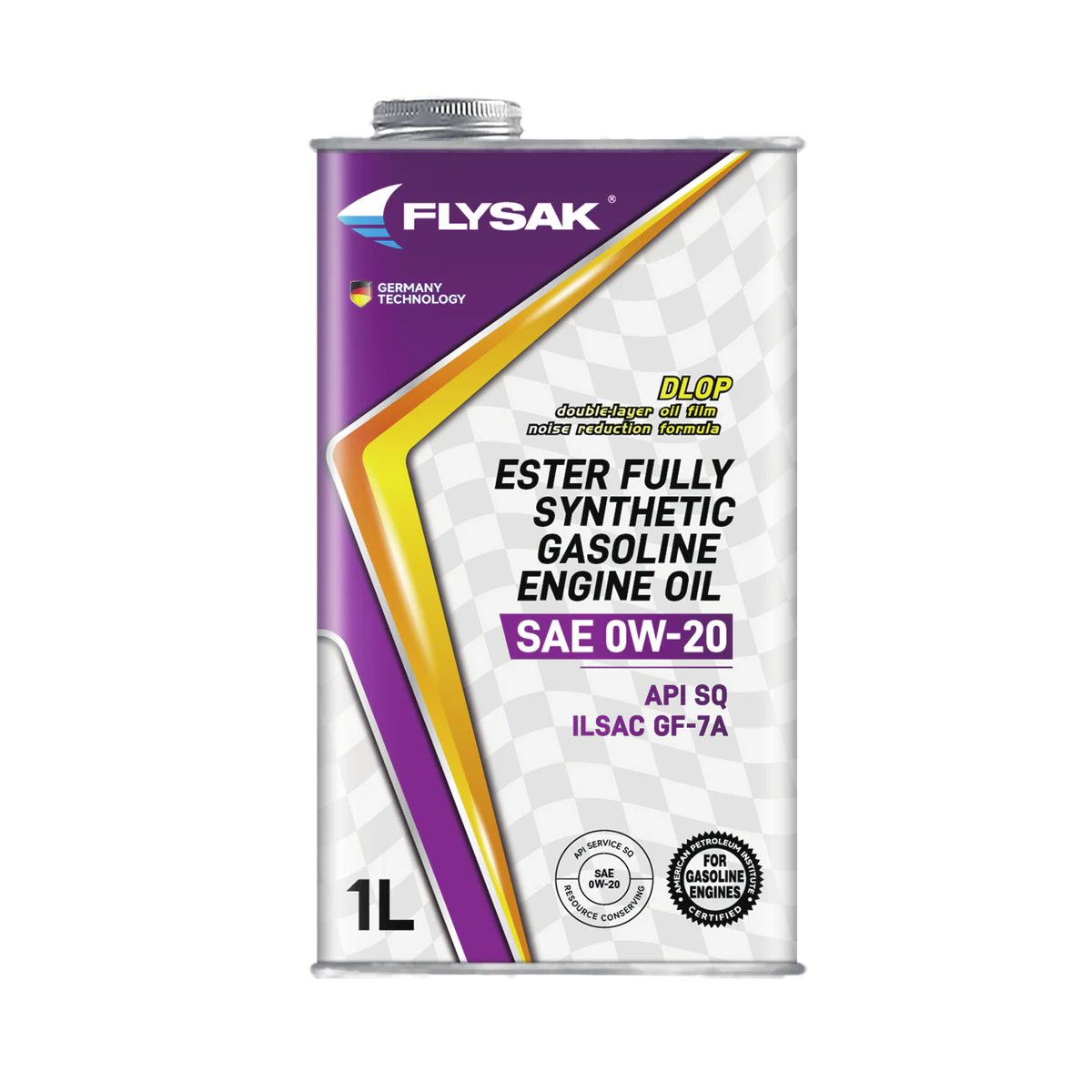
- Review the current EO-021 0W-20 product reference — Use a named product in the enquiry, without assuming 0W-16 substitution or universal hybrid coverage.
- Compare the passenger-car engine-oil catalogue — Keep other viscosity and performance routes visible when mapping the vehicle population.
Send an RFQ that makes unsupported applications visible
Attach the vehicle requirement matrix and identify the normal-service applications separately from any restricted alternatives. Request the exact product, TDS, SDS, claim evidence, relevant licence information, sample scope and finished-pack proof. Ask the supplier to return unresolved rows explicitly, with no unsupported equivalent-product wording.
For private label, include the destination market, channel, label languages, pack sizes and proposed quantities for each approved line. Keep price, minimums, availability and timing tied to the written offer. The useful outcome is not a generic answer that both oils are for hybrids; it is a traceable decision about what each stock line can honestly supply.
- Review the private-label product and artwork process — Connect the application decision with the finished brand and packaging brief.
- Send your hybrid engine-oil application brief — Share vehicle requirements and proposed packs for a current product-specific response.
Frequently asked questions
Can an importer replace a 0W-16 order with 0W-20?
Not simply because both are offered for hybrids. First verify the exact vehicle's manufacturer requirement and any applicable alternative permission. Obtain product-specific evidence and retain all restrictions before changing the purchase line.
Does the shared 0W designation make the oils equivalent?
No. It does not make the complete viscosity classifications or finished-product performance requirements identical. Keep both the specified grade and the complete performance requirement in the application record.
Does a hybrid label establish vehicle compatibility?
No. It is not a substitute for the vehicle, engine, market and specification information needed to assess the exact proposed oil.
Can a limited top-up alternative become a normal-service recommendation?
Do not expand it that way. Keep the applicable manufacturer's use case and restrictions, and obtain a separate basis for routine service if the instructions do not provide one.
Should a distributor stock both grades?
Only when documented customer applications and credible demand justify the matching products. Keep unresolved enquiries separate rather than adding or merging stock solely to meet a commercial minimum.
Does this guide confirm that FLYSAK supplies 0W-16?
No. It uses the documented EO-021 0W-20 catalogue reference without establishing a 0W-16 offer. Request a current written proposal for the exact requirement, product, claims and pack.
What should accompany a hybrid engine-oil RFQ?
Provide a vehicle and requirement matrix, source references, normal-service versus conditional uses, destination and channel, proposed packs and quantities. Request exact-product documents, claim evidence and an explicit list of unresolved applications.
Sources
Technical and regulatory references reviewed for this article:
- SAE J300_202405 public scope — Reviewed the viscosity-classification scope; no paid standard reproduced or engine fitment inferred.
- API Motor Oil Guide — Reviewed and visually checked the certification-mark page and category chart, including the separate 0W-16/GF-7B route and manufacturer-led selection. Not proof of FLYSAK licence scope or interchangeability.
- Ford owner information: FHEV engine-oil specification — Reviewed the paired viscosity/manufacturer specification and separately restricted top-up guidance. Application-specific example only, not a 0W-16/0W-20 substitution approval or evidence that a FLYSAK SKU meets Ford's specification.