
Table of contents
- Start with an application row, not a generic ATF price
- Make suppliers quote the same finished pack
- Convert the unit before comparing the number
- Put freight and trade terms on one delivery basis
- Compare the first order separately from repeat orders
- Use a clarification round before choosing a supplier
- Prepare a quote request that can receive a useful answer
- Related procurement guides
- Frequently asked questions
- Sources
Start with an application row, not a generic ATF price
Give each required fluid its own RFQ line. Record the vehicle group, transmission identification where available, required fluid designation, proposed supplier code and supporting document revision. Ask suppliers to flag applications they cannot substantiate. A broad multi-vehicle description should not silently replace a narrower requirement just to complete the price column.
Keep three questions separate: what the vehicle requires, what the proposed product claims and what evidence supports that claim. Where formal approval is claimed, request the exact product record and issuing authority. A technical recommendation is not automatically a manufacturer approval. ZF's official lubricant directory is an example of application-specific reference material; its passenger-car TE-ML 11 entry showed an October 1, 2026 update when reviewed for this guide.
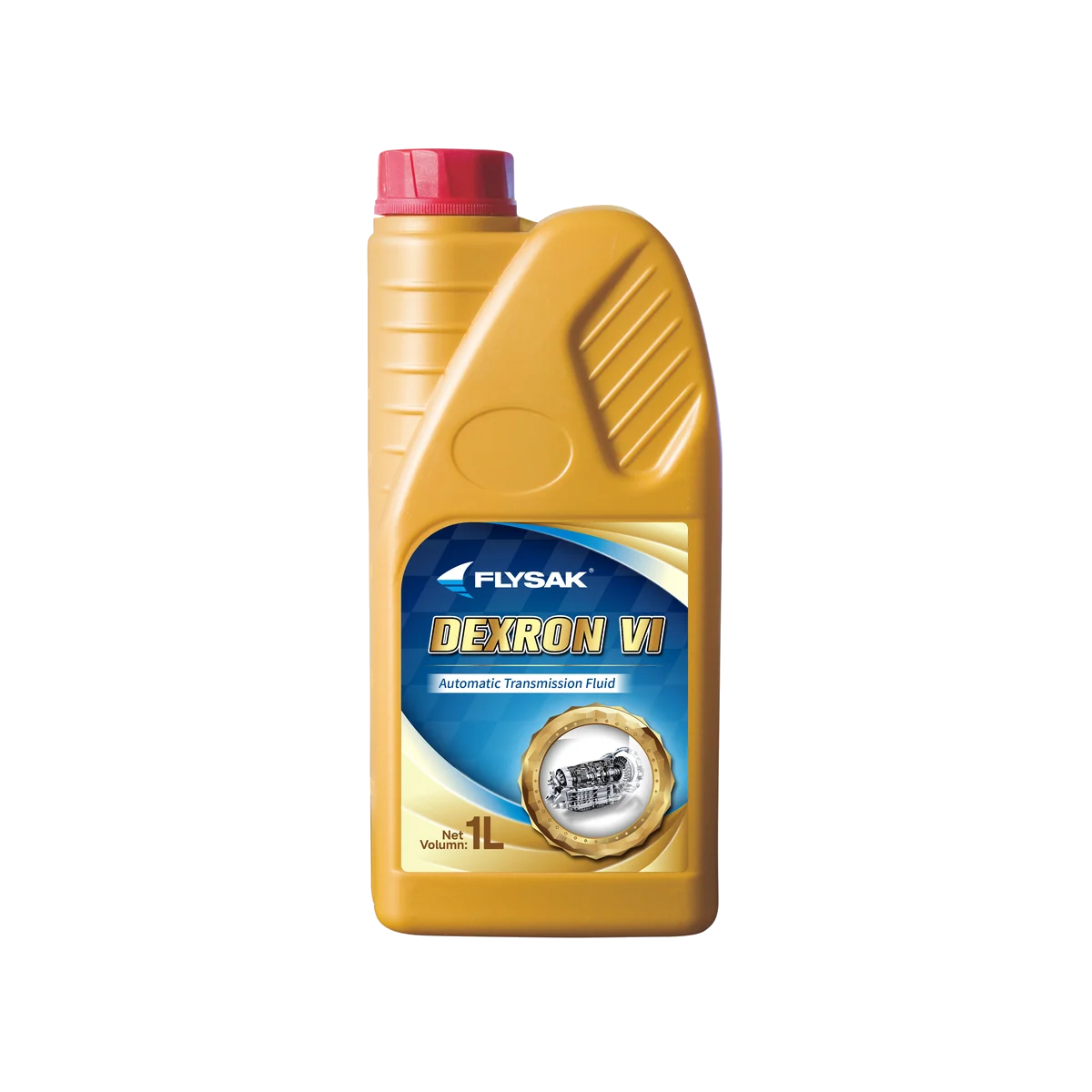
Use that source for the relevant ZF application, not as evidence that a FLYSAK product is approved. The FLYSAK catalogue is a starting point for identifying a proposal. For example, ask for the current documents behind the AT-003 DEXRON VI-type product rather than assuming its catalogue name proves a licence, approval or fitment for every automatic transmission.
- Review the AT-003 DEXRON VI-type product reference — Identify the exact proposed SKU before comparing its quotation.
Make suppliers quote the same finished pack
A litre of fluid and a retail-ready litre are different procurement scopes. Specify the fill volume, bottle reference, closure and seal arrangement, label revision, carton configuration and batch-code location. Ask which elements the supplier has actually included. A photograph can clarify appearance, but it is not a complete packaging specification.
For private label, separate a standard existing pack from requested changes. Identify who approves translations and claim wording, whether artwork preparation is included, and whether new components create separate minimum runs or unused-material balances. These are questions for the actual proposal, not universal FLYSAK fees or minimum quantities.
Resolve differences before negotiation. If one offer uses a different carton or label material, keep it as a clearly identified alternative rather than overwriting the common baseline. A useful saving changes something the buyer knowingly accepts; an unexplained omission only makes the spreadsheet look better.
| Comparison row | Confirm in each offer | Do not assume |
|---|---|---|
| Application and product | Required designation, supplier SKU and evidence reference | Similar names mean equivalent products |
| Filled retail pack | Fill volume, bottle, closure, seal and label revision | Bottle price includes every component |
| Carton and loading | Bottles per carton, dimensions, weights and pallet basis | All suppliers use the same loading plan |
| Quantity and mix | Quantity per SKU and pack, plus confirmed order minimums | A shipment total satisfies every packaging run |
| Price and delivery scope | Unit, currency, named place, trade term and validity | Freight or destination charges are included |
| Release conditions | Documents, approvals, payment milestones and timing triggers | A quoted lead time starts immediately |
- Review the private-label project route — Align the commercial pack with the product and artwork approval scope.
Convert the unit before comparing the number
Check whether the price is per bottle, carton, litre or another stated unit. For a filled-pack comparison, quoted goods price per litre equals the line's goods amount divided by its confirmed total fill volume in litres. Confirm bottle count and fill volume before using that calculation. Do not compare net fluid mass with volume without an agreed, product-specific conversion basis.
Keep the bottle and carton prices visible alongside the litre calculation. Your distributor may sell by carton while workshops buy individual bottles. A single blended average can hide a costly low-volume SKU, especially when two suppliers propose different proportions of conventional ATF and specialist fluids.
Create separate columns for quoted figures and buyer assumptions. Identify the exchange-rate date if converting currencies, and keep one-off artwork or packaging setup charges outside the recurring goods-price column. No actual price, exchange rate or cost saving is implied by this method; populate the sheet only with current, traceable offers.
Put freight and trade terms on one delivery basis
Write the agreed Incoterms rule, named place or port and edition into the comparison. Do not reduce this to a three-letter label with an unspecified location. Ask the supplier and forwarder to identify what is included and what remains payable by the buyer. ICC's official Incoterms 2020 overview explains the allocation of costs, risks and responsibilities; it also notes that CIF and CIP have different default insurance coverage.
For the commercial comparison, build a separate estimated landed-cost view. Goods, freight, insurance, import charges and local delivery can affect the total. The U.S. International Trade Administration's landed-cost guide stresses that such figures are estimates and can change. Its worked tariff examples are not lubricant tariff rates for your destination and should not be copied into an ATF budget.
Have the forwarder or customs adviser confirm the actual route, classification and destination charges. Keep recoverable-tax treatment and cash requirements distinct where relevant, with the buyer's finance adviser deciding the accounting basis. A supplier's shipment quotation is not confirmation of the importer's total local cost.
Compare the first order separately from repeat orders
The first shipment may carry costs that a later reorder does not. Ask which sample, artwork, packaging development or inspection items are included, separately charged or still unquoted. Do not label every item a mandatory fee: some may not apply. The purpose is to reveal the actual project scope, not to invent a standard cost schedule.
Check quantities at the level that creates the constraint. A supplier may need to confirm minimums by product, bottle, printed label or carton rather than only by total shipment volume. Ask what happens to unused custom packaging and whether a revised order mix changes the price. Written answers are more useful than an attractive container-level headline.
For replenishment, request a separate like-for-like scenario using the same approved configuration. Record quote validity, payment milestones and the event from which production timing is counted. Artwork approval, component availability and other conditions should be explicit. No fixed MOQ, stock position, lead time or payment arrangement can be inferred from this guide.
| Cost or condition | First-order check | Reorder check |
|---|---|---|
| Product and filled packs | Confirmed SKU mix and approved configuration | Same revision or a documented change |
| Artwork or custom components | Applicability, charge and unused-material ownership | Reuse conditions and new revision costs |
| Samples or inspection | Requested scope and who pays | Agreed repeat-batch release scope |
| Freight and local charges | Current route-specific estimate and exclusions | Fresh estimate, not an expired launch quote |
Use a clarification round before choosing a supplier
Send the comparison gaps back as a short numbered list. Request a revised quotation tied to the same RFQ revision, with accepted alternatives shown separately. The International Trade Administration describes the pro forma invoice as a pre-shipment quotation and negotiating document identifying the proposed goods and commercial details. It is a useful reference format, not proof that every destination requirement has been met.
Mark each row comparable, qualified alternative or unresolved. Do not award an offer with unresolved technical evidence merely because its price is complete. Nor should an included-cost cell and an unknown-cost cell receive the same score. Agree who owns each remaining technical, packaging or logistics question and what evidence closes it.
Before ordering, connect the accepted quote to the product specification, document revisions, artwork and sample decisions. Record the approved exceptions. Keep that acceptance file for repeat orders so a later substitution cannot disappear inside a familiar product name or unchanged headline price.
Prepare a quote request that can receive a useful answer
For a FLYSAK enquiry, send your destination, sales channel, required fluid designations, application evidence available, quantities by SKU, intended pack and brand route. Add the delivery basis you want compared and the approvals still outstanding. Request written confirmation of the exact product, documents, packaging and commercial terms; the catalogue is a discussion reference, not a binding offer.
The best comparison ends with a clear buying decision and a short list of controlled exceptions. It does not need a complicated scoring model. First establish that the products can do the required job, then compare the same pack and delivery scope. Negotiate from that common basis, rather than negotiating away information you will need after the shipment arrives.
- Browse the transmission-fluid range — Build a proposed SKU list while keeping ATF, CVT and DCT requirements separate.
- Send a structured transmission-fluid RFQ — Request confirmation for the exact product, pack, order mix and delivery basis.
Frequently asked questions
What should I compare before the ATF price?
Match the intended transmission requirement, proposed SKU and supporting claim evidence first. Then fix the filled-pack specification, order mix and delivery scope. Without those checks, two prices may describe different purchases.
Is the lowest price per litre the best ATF offer?
Not necessarily. First establish equivalent applications and packaging, then compare included costs and buyer-paid estimates on the same delivery basis. Keep unresolved technical or cost items visible rather than treating them as zero.
How do I compare a carton price with a bottle price?
Confirm bottles per carton and fill volume per bottle. Convert both offers to the same goods-price unit while retaining the carton and bottle totals. Do not mix recurring goods costs with one-off setup charges.
Does a DEXRON-type product name prove approval?
No. Ask for the exact written claim and the evidence behind it. Where a formal licence or manufacturer approval is claimed, verify the specific product and scope through the issuing authority rather than inferring it from a catalogue name.
Can I compare different Incoterms quotations directly?
Not by headline amount alone. Identify the rule, named place and edition, then reconcile the included costs and buyer responsibilities. Ask a qualified forwarder or adviser to confirm the route-specific charges and assumptions.
What MOQ and lead time should the quotation state?
Ask for quantities and conditions applicable to the exact SKU, formulation, pack, printed components and order mix. Timing should identify its starting trigger and dependencies. There is no universal MOQ or delivery promise for every ATF project.
What if the supplier leaves a comparison row blank?
Treat it as unresolved, not included or free. Ask for written clarification and a revised quotation. Keep any alternative pack, product or service scope separate from the common comparison baseline.
Sources
Technical and regulatory references reviewed for this article:
- ZF Aftermarket: Lists of Lubricants — Reviewed October 17, 2026 for application-specific lubricant selection and the TE-ML 11 directory update dated October 1, 2026. Not evidence of approval for a FLYSAK product.
- ICC: Incoterms 2020 — Reviewed the official overview of cost, risk and responsibility allocation, including the distinction between CIF and CIP insurance coverage. No full paid rules reproduced.
- International Trade Administration: Determine Total Export Price — Reviewed landed-cost components and the need to treat freight, taxes and other charges as estimates. U.S. examples are not destination-specific lubricant tariff advice.
- International Trade Administration: Common Export Documents — Reviewed the role of a pro forma invoice and consistency of commercial and packing information. U.S. export requirements are not applied indiscriminately to China-origin shipments.